

Chapter 7 – Motor Vehicle Power of Attorney/Odometer Disclosure Form 82995 is a secure power of attorney form published by the Escambia County Tax Collector. An owner uses it to disclose a vehicle's odometer reading to a dealership and to authorize the dealership to execute the title when the title is lost, held by a lienholder, or held electronically and staying electronic. On this page you can fill out the form online on FillingPDF and download or print the completed PDF; the original PDF is published by the Escambia County Tax Collector.
Last updated
What is 82995?
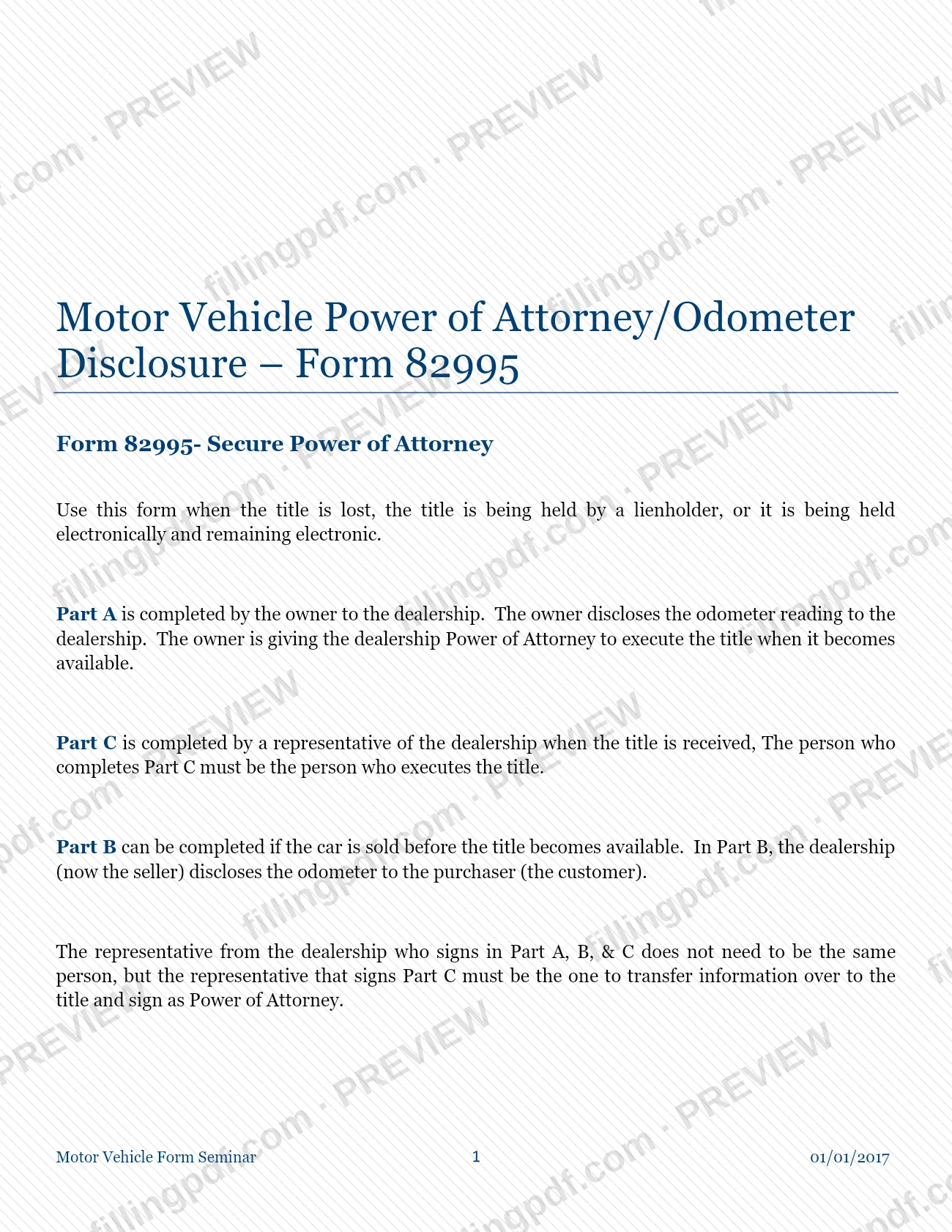
Form 82995, Motor Vehicle Power of Attorney/Odometer Disclosure, is a secure power of attorney form, published by the Escambia County Tax Collector, that lets an owner disclose a vehicle's odometer reading to a dealership and appoint it to execute the title when it becomes available.
The form is meant for three situations: the title is lost, the title is being held by a lienholder, or the title is held electronically and will remain electronic. Because the title is not available, Part A works as the Federal Odometer Disclosure between the seller and the purchaser. When the title arrives, the information disclosed in Part A is transferred onto the title.
The form has three parts:
- Part A, Seller's Power of Attorney to Disclose Mileage, is completed by the owner for the dealership. It records the odometer reading and gives the dealership power of attorney to execute the title.
- Part B is used if the vehicle is sold before the title becomes available. The dealership, now the seller, discloses the odometer to the purchaser, who is the customer.
- Part C, Certification By Attorney In Fact, is completed by a dealership representative when the title is received. The person who completes Part C signs the title.
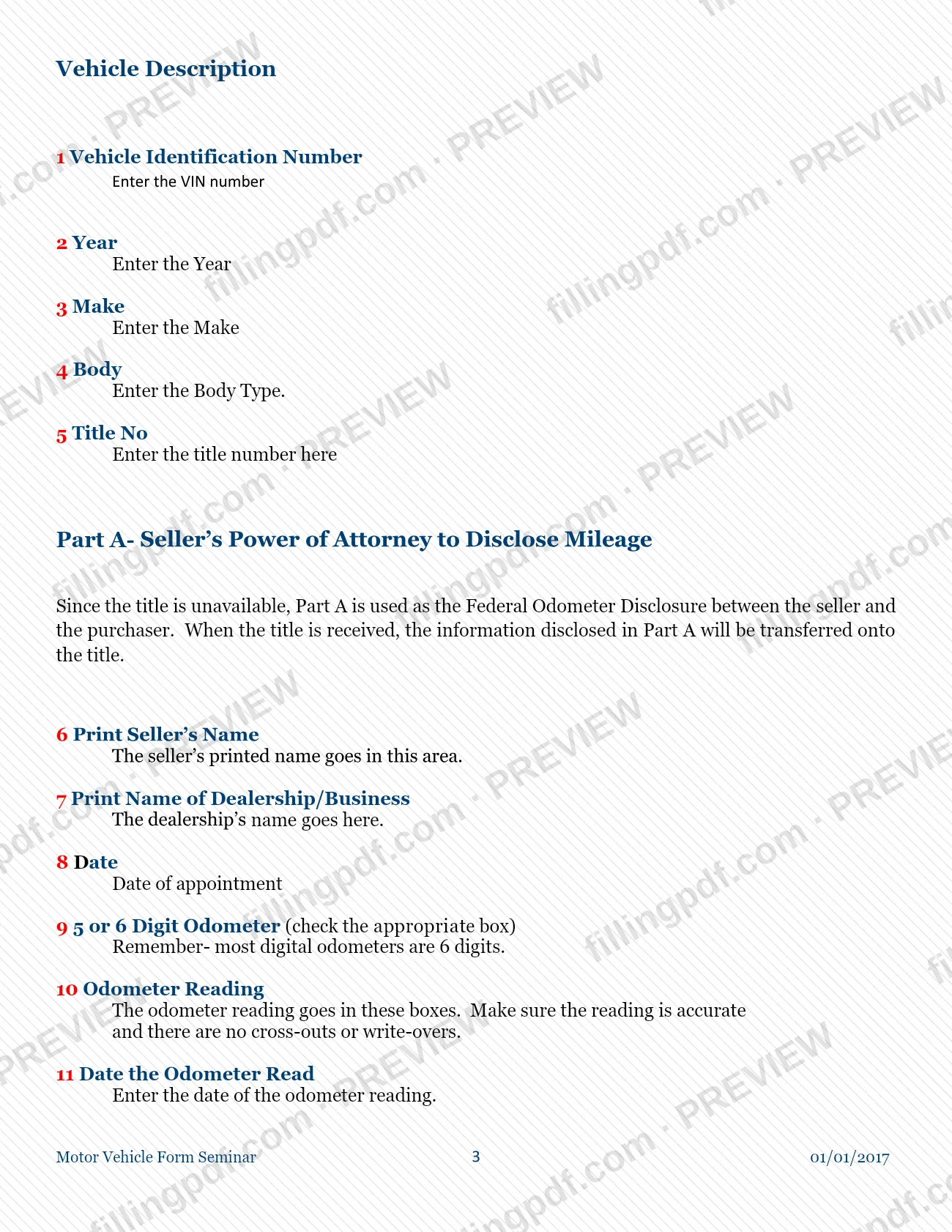
The top of the form also asks for a vehicle description: VIN, year, make, body type and title number.
Who needs to file 82995?
The main users are vehicle owners who are dealing with a dealership while the title is unavailable. The form says to use it when the title is lost, when a lienholder is holding the title, or when the title is held electronically and is remaining electronic.
- Owners (sellers): complete Part A, printing their name, disclosing the odometer reading and signing. A co-seller signs on the co-seller lines if there is one.
- Dealership representatives: sign for the dealership in Part A, and in Part B when the vehicle is sold before the title is available.
- The attorney in fact: the person who completes Part C must be the person who executes the title, and that person signs it as power of attorney.
The dealership representatives who sign in Parts A, B and C do not have to be the same person. The exception is Part C: whoever signs it must be the one who transfers the information to the title and signs as power of attorney.
The form is not meant for situations where the title is in hand, because its use is tied to an unavailable title.
When to file 82995
Use Form 82995 when the title is unavailable: it is lost, held by a lienholder, or held electronically and remaining electronic. Part A is completed at that stage, when the owner gives the dealership power of attorney and discloses the odometer reading.
Part B is completed only if the vehicle is sold before the title becomes available. Part C is completed by a dealership representative when the title is received. The form prints no separate due date.
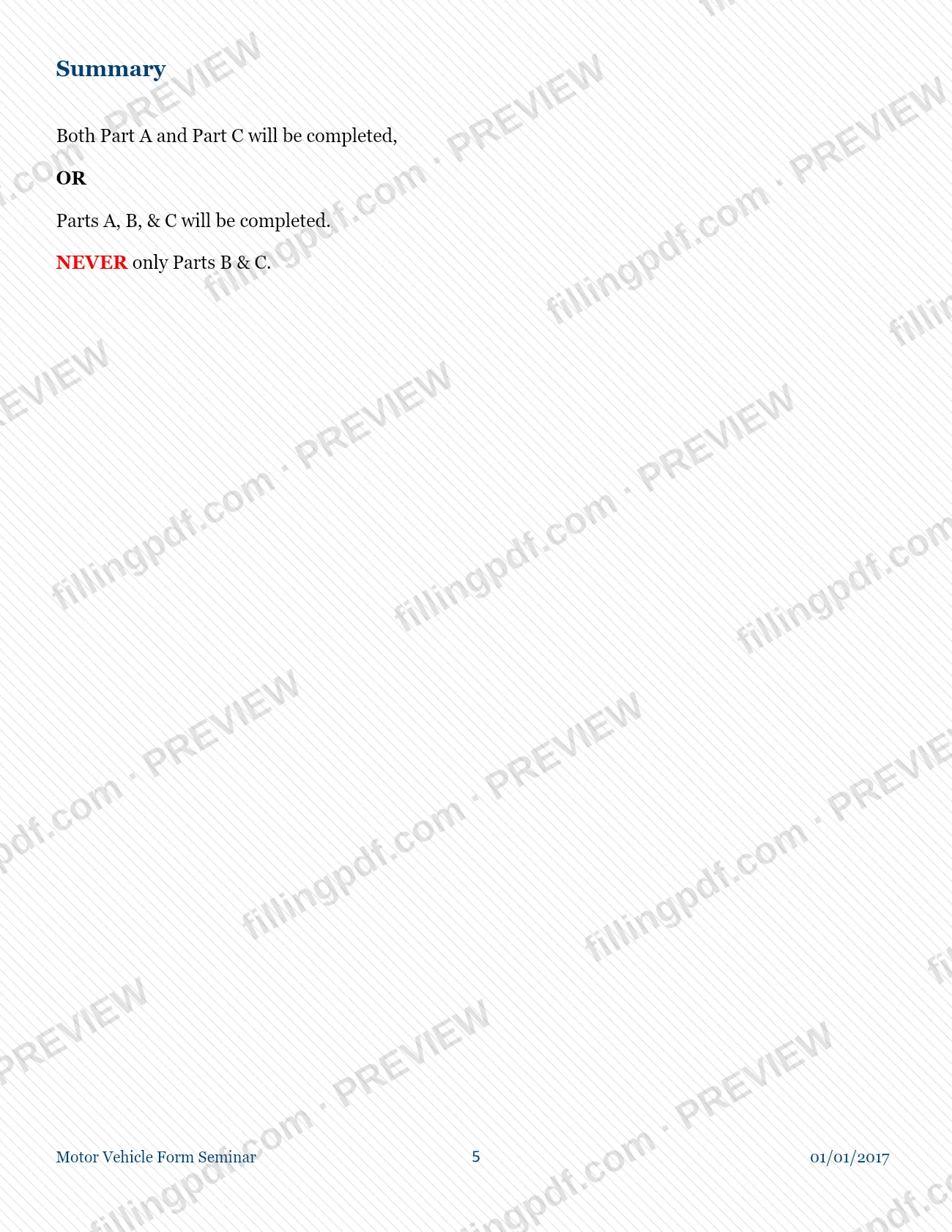
The form's summary states the permitted combinations: Parts A and C, or Parts A, B and C. Never complete only Parts B and C.
How to fill out 82995
Enter the vehicle description
Lines 1 to 5: enter the Vehicle Identification Number, year, make, body type and title number.
Print seller and dealership names
In Part A, line 6 takes the seller's printed name and line 7 the dealership or business name. Line 8 is the date of appointment.
Record the odometer reading
Line 9: check the 5 or 6 digit odometer box. Line 10: enter the reading with no cross-outs or write-overs. Line 11: enter the date the odometer was read.
Check the odometer certification
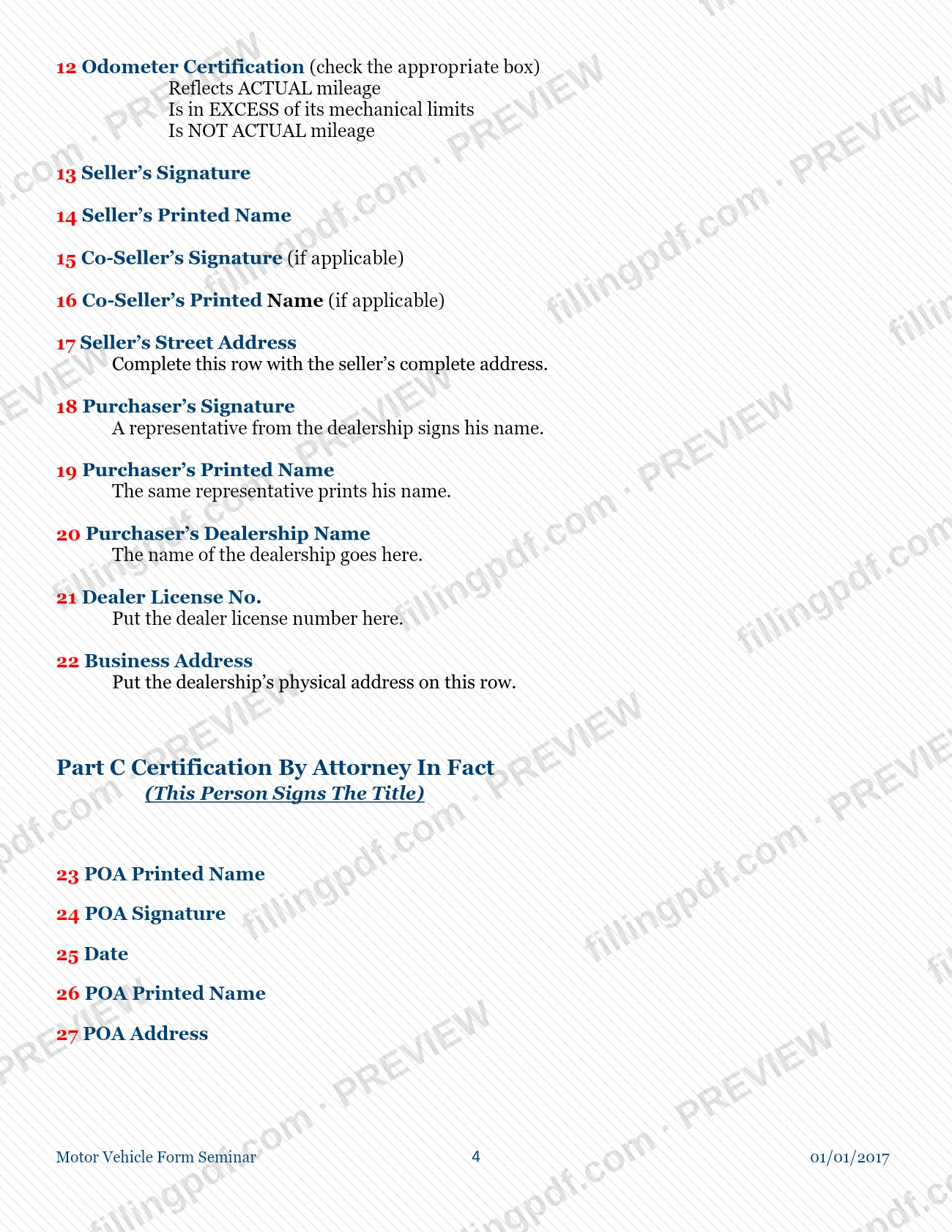
Line 12: check one box: reflects ACTUAL mileage, is in EXCESS of its mechanical limits, or is NOT ACTUAL mileage.
Sign the seller lines
Lines 13 and 14: seller's signature and printed name. Lines 15 and 16: co-seller's signature and printed name, if applicable. Line 17: the seller's complete street address.
Complete the dealership lines
Lines 18 to 22: a dealership representative signs and prints the same name, then enters the dealership name, dealer license number and physical business address.
Decide whether Part B is needed
Complete Part B only if the vehicle is sold before the title becomes available, with the dealership disclosing the odometer to the customer. Never complete Parts B and C without Part A.
Complete Part C when the title arrives
Lines 23 to 27: the attorney in fact prints the POA name, signs, dates and enters the name and address. This person must be the one who signs the title.
Review and download the completed PDF
Check that the VIN, odometer reading and signatures are correct and that the right parts are completed. Download or print the completed PDF from FillingPDF.
How to submit 82995
The form prints no mailing address, portal or appointment rule. It is exchanged between the owner and the dealership: the owner completes Part A for the dealership, and the dealership keeps it until the title is available.
- Part A and Part B: these disclose the odometer reading between the seller and the purchaser while the title is unavailable.
- Part C: when the title is received, a dealership representative completes Part C, transfers the information disclosed in Part A to the title and signs the title as power of attorney.
Ask the Escambia County Tax Collector how the completed form should be handled with the title paperwork. FillingPDF lets you fill out and download the PDF; submission follows the channels above.
Common mistakes to avoid
- Completing only Parts B and C. The form says to complete Parts A and C, or Parts A, B and C, and never only B and C.
- Leaving cross-outs or write-overs in the odometer reading; the form says the reading must be accurate with none.
- Choosing the wrong odometer box: 5 or 6 digits. The form notes that most digital odometers are 6 digits.
- Having a different person sign Part C than the one who transfers the information to the title and signs as power of attorney.
- Using the form when the title is in hand, rather than lost, held by a lienholder, or held electronically and remaining electronic.
- Leaving out the dealer license number or the dealership's physical business address in the dealership lines.
- Skipping the odometer certification box (actual mileage, excess of mechanical limits, or not actual mileage).
Frequently asked questions
What is Form 82995?
Form 82995 is the Motor Vehicle Power of Attorney/Odometer Disclosure, a secure power of attorney form published by the Escambia County Tax Collector. It lets an owner disclose the odometer reading and give a dealership power of attorney to execute the title when it is available.
When do I use Form 82995?
Use it when the title is lost, held by a lienholder, or held electronically and staying electronic. In those cases Part A serves as the Federal Odometer Disclosure between seller and purchaser until the title is received.
Which parts of Form 82995 must I complete?
Complete Parts A and C, or Parts A, B and C. Never complete only Parts B and C. Part B is needed only if the vehicle is sold before the title becomes available.
Who signs Part C of Form 82995?
The person who executes the title signs Part C, as attorney in fact. Dealership representatives who sign Parts A, B and C need not be the same person, but the Part C signer must transfer the information to the title.
Can I fill out Form 82995 online?
Yes. You can fill out the PDF online on FillingPDF and download or print it. FillingPDF is an independent service and does not file or submit the form; the form itself prints no submission channel.
What odometer certification options does the form give?
Line 12 offers three boxes: the odometer reflects the ACTUAL mileage, is in EXCESS of its mechanical limits, or is NOT ACTUAL mileage. You also mark whether the odometer has 5 or 6 digits on line 9.
What happens to the information in Part A when the title arrives?
The information disclosed in Part A is transferred onto the title. A dealership representative completes Part C at that point, and that person must be the one who transfers it and signs the title as power of attorney.
Ready to fill out 82995?
Fill out 82995 now