
The FY26 CPA Surcharge Exemption Application (Form CP-4) is the form the City of Boston Assessing Department uses to review a request for exemption from the Community Preservation Act (CPA) surcharge. It is one of the Boston property tax forms for low income persons and low or moderate income seniors. It asks about your household, your 2024 out-of-pocket medical expenses and your 2024 gross income, including any co-owners. On this page you can fill out the form online on FillingPDF and download or print the completed PDF; the city publishes the original PDF at boston.gov.
Last updated
What is CP-4?
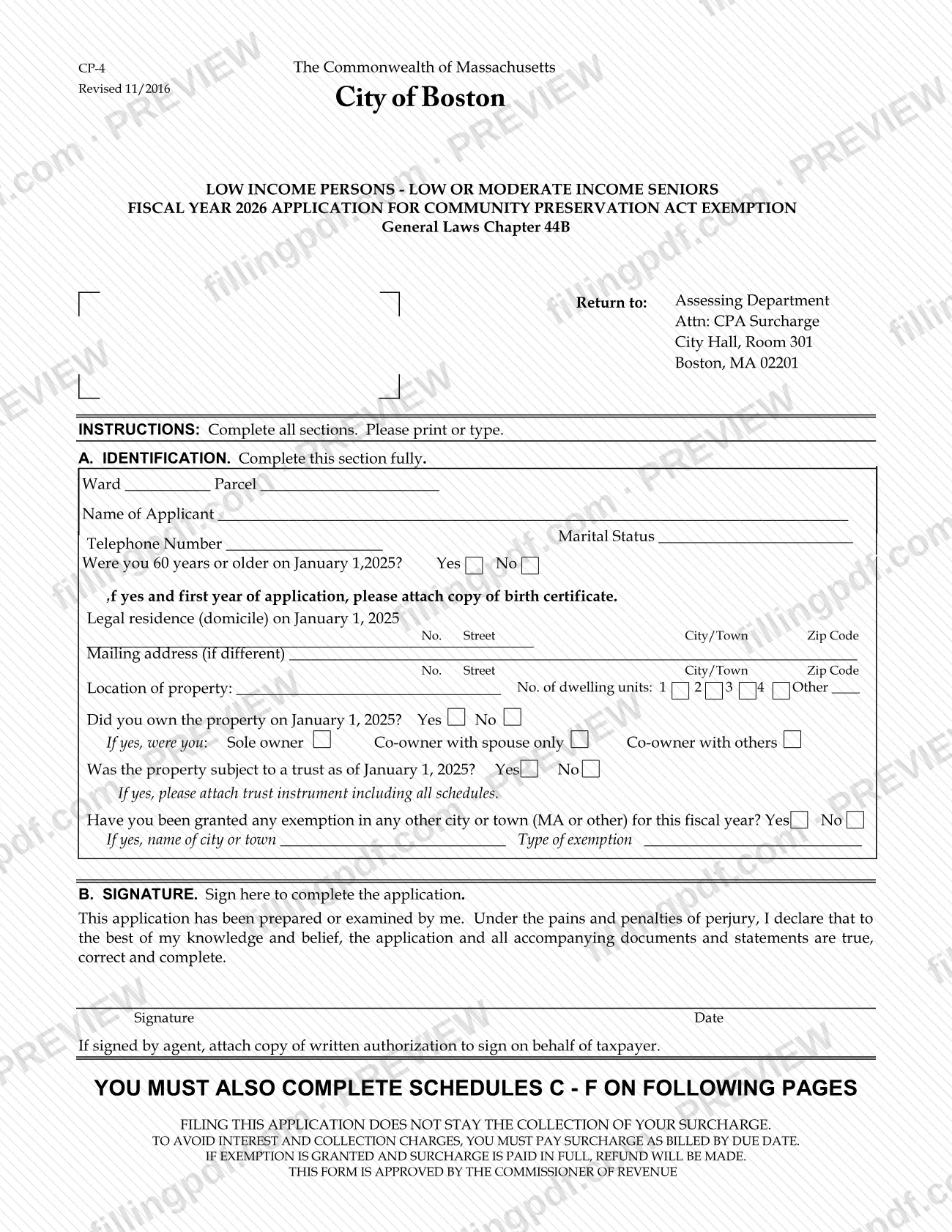
The FY26 CPA Surcharge Exemption Application, printed as Form CP-4 under General Laws Chapter 44B, is the City of Boston application for exemption from the Community Preservation Act (CPA) surcharge, for low income persons and low or moderate income seniors, for fiscal year 2026.
The printed title is "Fiscal Year 2026 Application for Community Preservation Act Exemption," and the form carries the line "The Commonwealth of Massachusetts, City of Boston." It states that it is approved by the Commissioner of Revenue. You return it to the Assessing Department, which handles it for the Board of Assessors.
The form has six parts:
- A. Identification: ward, parcel, applicant, residence, ownership, trust and other-exemption questions.
- B. Signature: a declaration made under the pains and penalties of perjury.
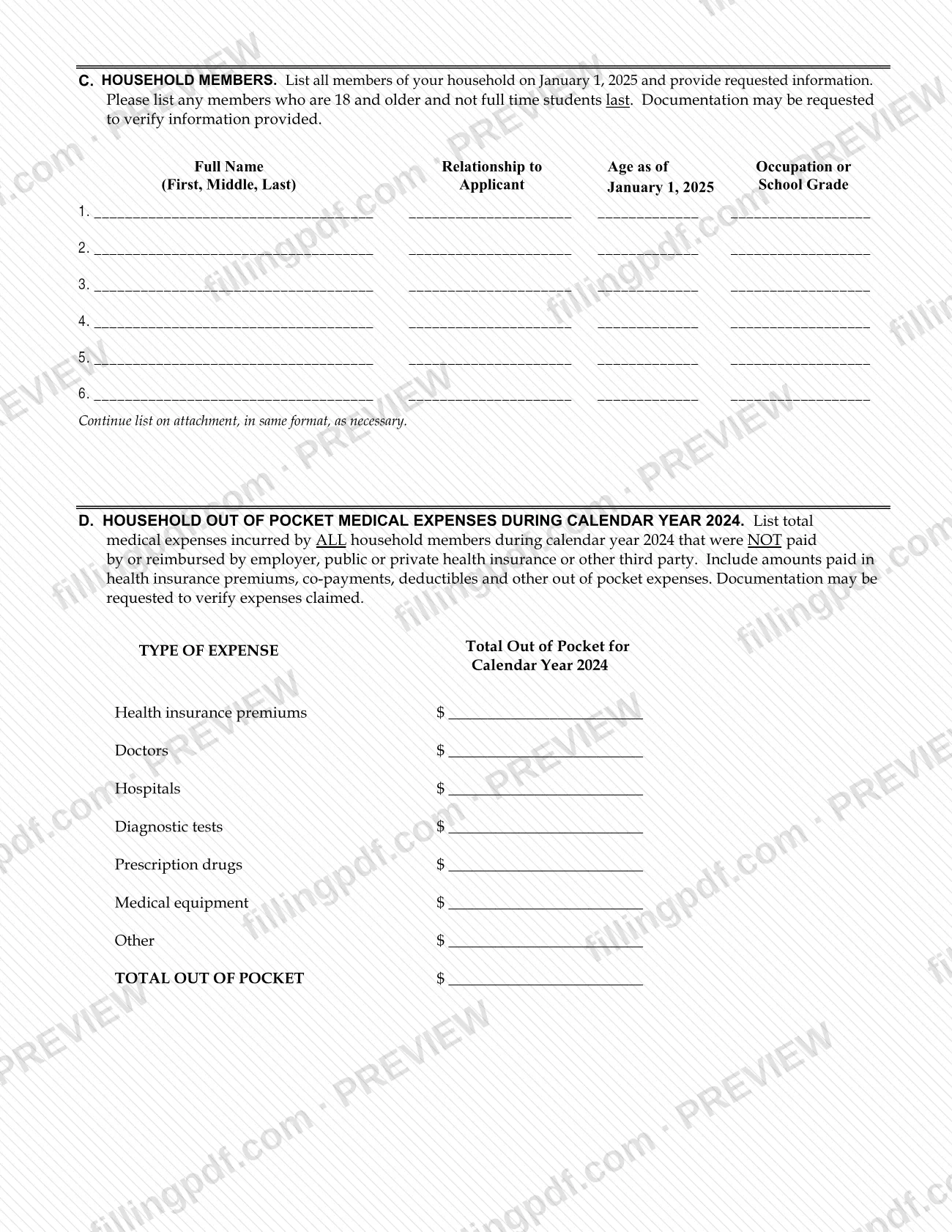
- C. Household Members: everyone in the household on January 1, 2025.
- D. Household Out of Pocket Medical Expenses during calendar year 2024.
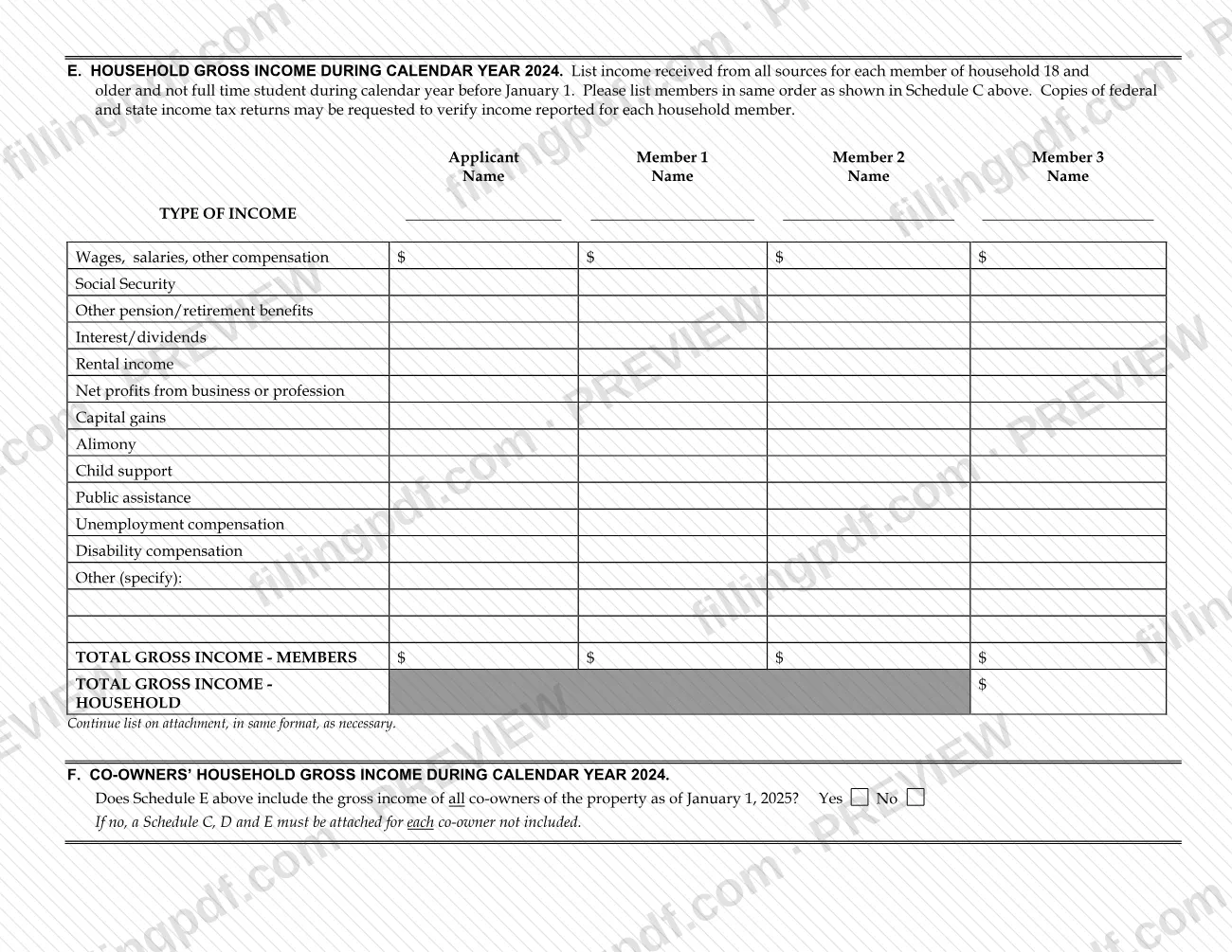
- E. Household Gross Income during calendar year 2024.
- F. Co-Owners' Household Gross Income during calendar year 2024.
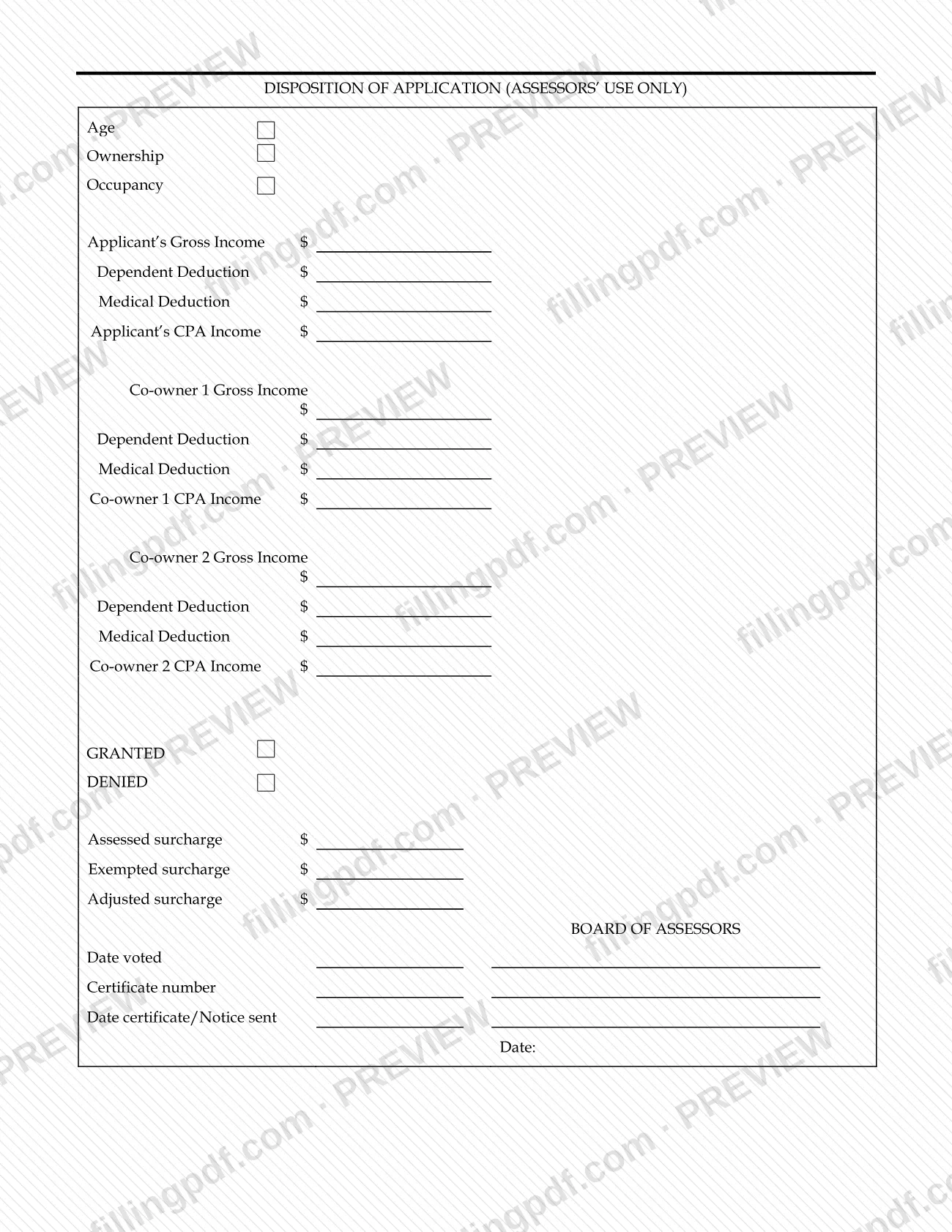
A final box, "Disposition of Application (Assessors' Use Only)," records the age, ownership and occupancy checks, the income and deduction figures, whether the exemption is granted or denied, and the Board of Assessors' vote. You do not fill it in.
This is not the FY2027 Community Preservation Eligibility Determination Form that the city's Community Preservation page offers for project funding. That form is the first step for CPA project money. Form CP-4 concerns the surcharge on a property owner.
Who needs to file CP-4?
The main group is property owners in Boston who think they qualify for relief from the CPA surcharge as a low income person or a low or moderate income senior. The city's Community Preservation page says many seniors and lower income property owners are exempt from the surcharge, and it tells anyone who thinks they may be exempt to contact the Assessing Department.
The form asks you to state:
- whether you were 60 years or older on January 1, 2025;
- whether you owned the property on January 1, 2025, and whether as sole owner, co-owner with spouse only or co-owner with others;
- whether the property was subject to a trust as of January 1, 2025;
- whether you have been granted an exemption in any other city or town, in Massachusetts or elsewhere, for this fiscal year.
Co-owners matter. If the household income in Schedule E does not include all co-owners as of January 1, 2025, Schedules C, D and E must be attached for each co-owner not included.
An agent may sign for the taxpayer only with a copy of the written authorization to sign on the taxpayer's behalf. The printed form sets no other group of excluded applicants; the income and age tests are applied by the assessors.
When to file CP-4
File the application with the Assessing Department by April 1 of the fiscal year. The city's Community Preservation page says exemption applications become available in January of each fiscal year.
Filing the application does not delay or stop your bill. The form states in capital letters that filing does not stay the collection of your surcharge, and that to avoid interest and collection charges you must pay the surcharge as billed by its due date. If the exemption is granted and the surcharge has been paid in full, a refund will be made.
The form's dates are fixed to this fiscal year: household members and ownership are reported as of January 1, 2025, and medical expenses and income are for calendar year 2024. The page gives no processing time for decisions.
Documents you need
- A copy of your birth certificate, if you were 60 years or older on January 1, 2025 and this is your first year of application.
- The trust instrument including all schedules, if the property was subject to a trust as of January 1, 2025.
- A copy of the written authorization to sign on behalf of the taxpayer, if an agent signs the application.
- Schedules C, D and E for each co-owner not included in your Schedule E, if you answer No to the Schedule F question about all co-owners' income.
- A continuation attachment in the same format, if you have more household members or income columns than the form has room for in Schedules C and E.
How to fill out CP-4
Enter ward, parcel and applicant details
In Section A, enter the Ward and Parcel, the Name of Applicant, your Telephone Number and your Marital Status. The form says to complete all sections and to print or type.
Answer the age question
Mark Yes or No for whether you were 60 years or older on January 1, 2025. If Yes and this is your first year of application, attach a copy of your birth certificate.
Give residence and property location
Enter your legal residence (domicile) on January 1, 2025, your mailing address if different, and the location of the property. Mark the number of dwelling units: 1, 2, 3, 4 or Other.
Describe ownership, trust and other exemptions
Say whether you owned the property on January 1, 2025 and whether you were sole owner, co-owner with spouse only or co-owner with others. Answer the trust question, attaching the trust instrument with all schedules if Yes, and name the city or town and type of exemption if you were granted one elsewhere this fiscal year.
Sign and date Section B
Sign and date the declaration made under the pains and penalties of perjury. If an agent signs, attach a copy of the written authorization to sign on behalf of the taxpayer.
List household members in Schedule C
List every member of your household on January 1, 2025 with full name, relationship to applicant, age as of January 1, 2025 and occupation or school grade. Continue on an attachment in the same format if needed.
Total medical expenses in Schedule D
Enter the 2024 out-of-pocket amounts for health insurance premiums, doctors, hospitals, diagnostic tests, prescription drugs, medical equipment and other, then the TOTAL OUT OF POCKET. Include only expenses not paid or reimbursed by an employer, insurance or other third party.
Report household income in Schedule E
For the applicant and each member 18 or older who is not a full-time student, enter 2024 gross income by type, from wages to disability compensation and Other (specify). Use the same member order as Schedule C, then enter each member's total and the TOTAL GROSS INCOME - HOUSEHOLD.
Answer the co-owner question in Schedule F
Mark whether Schedule E includes the gross income of all co-owners as of January 1, 2025. If No, attach Schedules C, D and E for each co-owner not included.
Leave the Assessors' box blank
The Disposition of Application section is for Assessors' use only, so do not enter anything in it.
Review and download the completed PDF
Check that every section and schedule is complete and that the attachments match your answers. Download or print the completed PDF from FillingPDF and return it as described under How to submit.
How to submit CP-4
The form says "Return to" the Assessing Department; it names one address and no other channel.
- Address: Assessing Department, Attn: CPA Surcharge, City Hall, Room 301, Boston, MA 02201.
- Questions: the city's Community Preservation page lists the Assessing Department at 617-635-4287 and [email protected] for anyone who thinks they may be exempt.
Send the signed application together with Schedules C through F and any attachments the form requires, such as a birth certificate copy, a trust instrument or a written authorization for an agent. Allow time to arrive by April 1. The form does not ask for a fee. Keep paying the surcharge by its due date while the application is pending.
FillingPDF lets you fill out and download the PDF; submission follows the channels above.
Common mistakes to avoid
- Skipping payment of the surcharge because an application is on file; the form says filing does not stay collection and unpaid bills can incur interest and collection charges.
- Missing the April 1 filing deadline for the fiscal year.
- Leaving out the birth certificate copy when you were 60 or older on January 1, 2025 and this is your first year applying.
- Not attaching the trust instrument with all schedules when the property was subject to a trust as of January 1, 2025.
- Submitting only the first page; the form says you must also complete Schedules C through F.
- Listing income members in Schedule E in a different order than the household members in Schedule C.
- Answering Yes to the Schedule F question when Schedule E leaves out a co-owner, instead of attaching Schedules C, D and E for that co-owner.
- Having an agent sign without attaching a copy of the written authorization to sign for the taxpayer.
- Writing in the "Disposition of Application (Assessors' Use Only)" box.
Frequently asked questions
What is Form CP-4, the FY26 CPA Surcharge Exemption Application?
It is the City of Boston application for exemption from the Community Preservation Act surcharge for fiscal year 2026. The form is for low income persons and low or moderate income seniors and asks about household members, 2024 medical expenses and 2024 gross income.
When is the CPA surcharge exemption application due in Boston?
By April 1 of the fiscal year, filed with the Assessing Department. The city says applications become available in January of each fiscal year. The form itself prints no separate due date.
Do I still have to pay the CPA surcharge after I apply?
Yes. The form says filing does not stay collection of your surcharge, and you must pay it as billed by the due date to avoid interest and collection charges. If the exemption is granted and you paid in full, a refund will be made.
Where do I send the CPA surcharge exemption application in Boston?
Return it to the Assessing Department, Attn: CPA Surcharge, City Hall, Room 301, Boston, MA 02201. The form names no other channel. For questions, call 617-635-4287 or email [email protected].
What do I have to attach to Form CP-4?
It depends on your answers. Attach a birth certificate copy if you were 60 or older on January 1, 2025 and it is your first year applying, the trust instrument with all schedules if the property was in a trust, and a written authorization if an agent signs.
Can someone else sign the application for me?
Yes, an agent can sign, but you must attach a copy of the written authorization to sign on behalf of the taxpayer. Otherwise the applicant signs and dates Section B under the pains and penalties of perjury.
What if the property has co-owners?
Schedule F asks whether Schedule E includes the gross income of all co-owners as of January 1, 2025. If it does not, you must attach a Schedule C, D and E for each co-owner who is not included.
Can I fill out the Boston CPA surcharge exemption form online?
You can fill out the PDF online on FillingPDF and download or print it. FillingPDF is an independent service and does not file it with the City of Boston; you return it to the Assessing Department yourself.
Ready to fill out CP-4?
Fill out CP-4 now