
The scheduling order, Form 4-506, is the New Mexico Judicial Branch Supreme Court approved form that a court uses in magistrate and metropolitan court cases to set the dates the parties must follow, from motions to amend the pleadings to witness lists and exhibits. Because it is an order, it ends with the judge's signature and the date of signature. On this page you can fill out the form online on FillingPDF and download or print the completed PDF; the form itself is published by the New Mexico Judicial Branch at nmcourts.gov.
Last updated
What is 4-506?
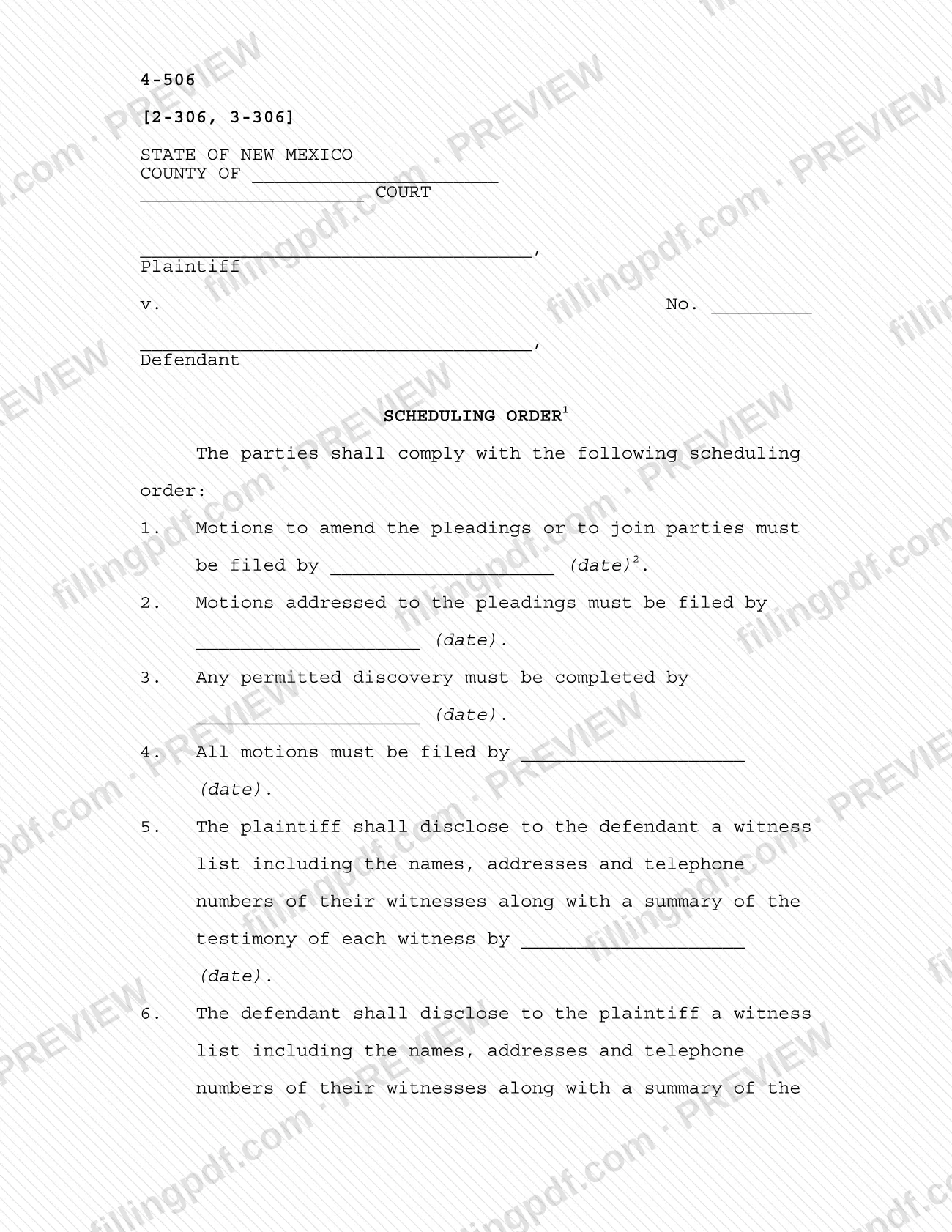
Form 4-506, Scheduling order. (Magistrate and Metropolitan) is a New Mexico Judicial Branch Supreme Court approved form: a court order that tells the parties in a case the dates by which they must file motions, finish discovery, disclose witnesses and share exhibits.
The form opens with a caption: State of New Mexico, the county, the court, the plaintiff and defendant names and the case number. It then orders the parties to comply with ten numbered paragraphs, each with a blank for a date:
- Motions to amend the pleadings or to join parties, motions addressed to the pleadings, completion of any permitted discovery, and the deadline for all motions (paragraphs 1 to 4).
- Witness lists with names, addresses, telephone numbers and a summary of each witness's testimony, first from the plaintiff and then from the defendant (paragraphs 5 and 6).
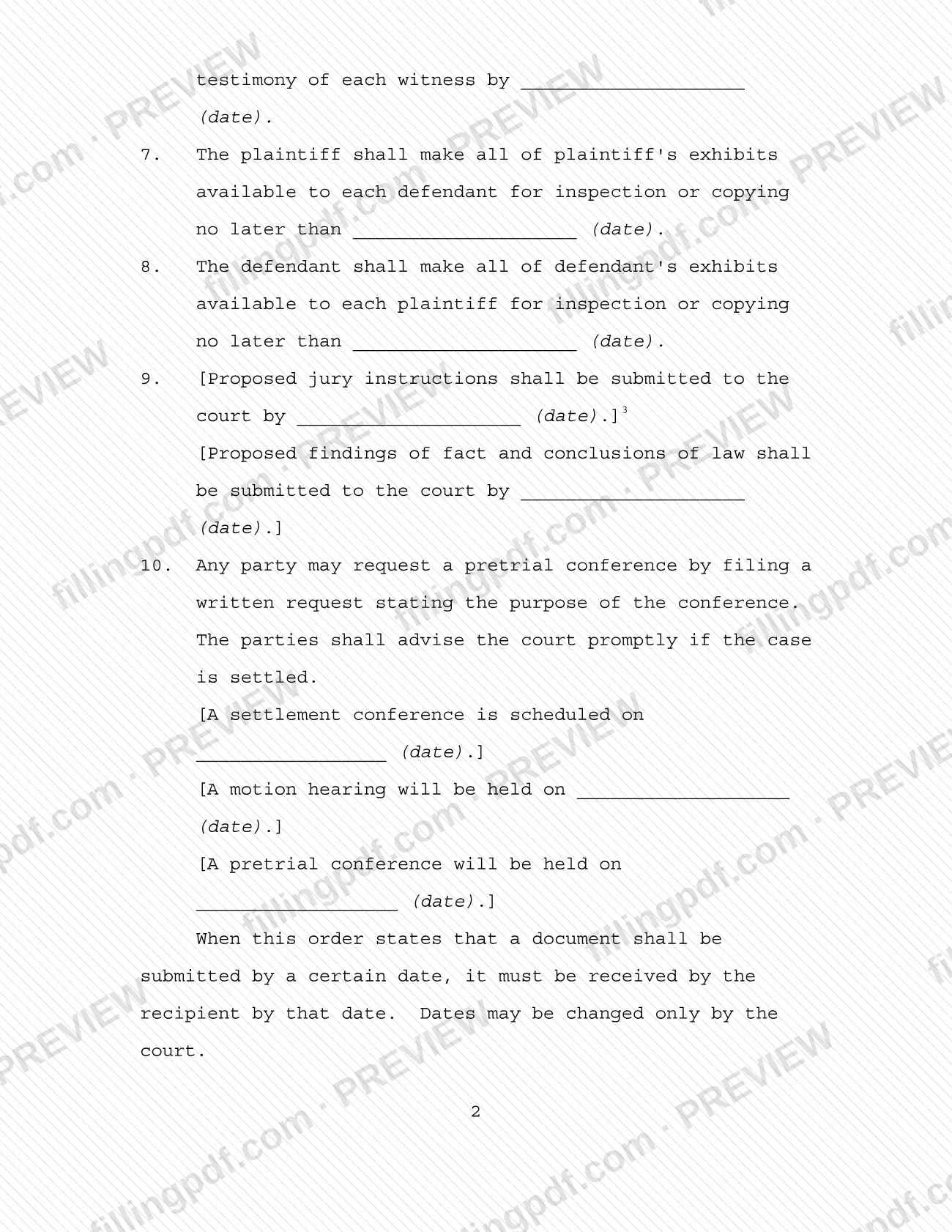
- Availability of each side's exhibits for inspection or copying (paragraphs 7 and 8).
- Proposed jury instructions or proposed findings of fact and conclusions of law (paragraph 9).
- Pretrial conference, settlement conference and motion hearing options (paragraph 10).
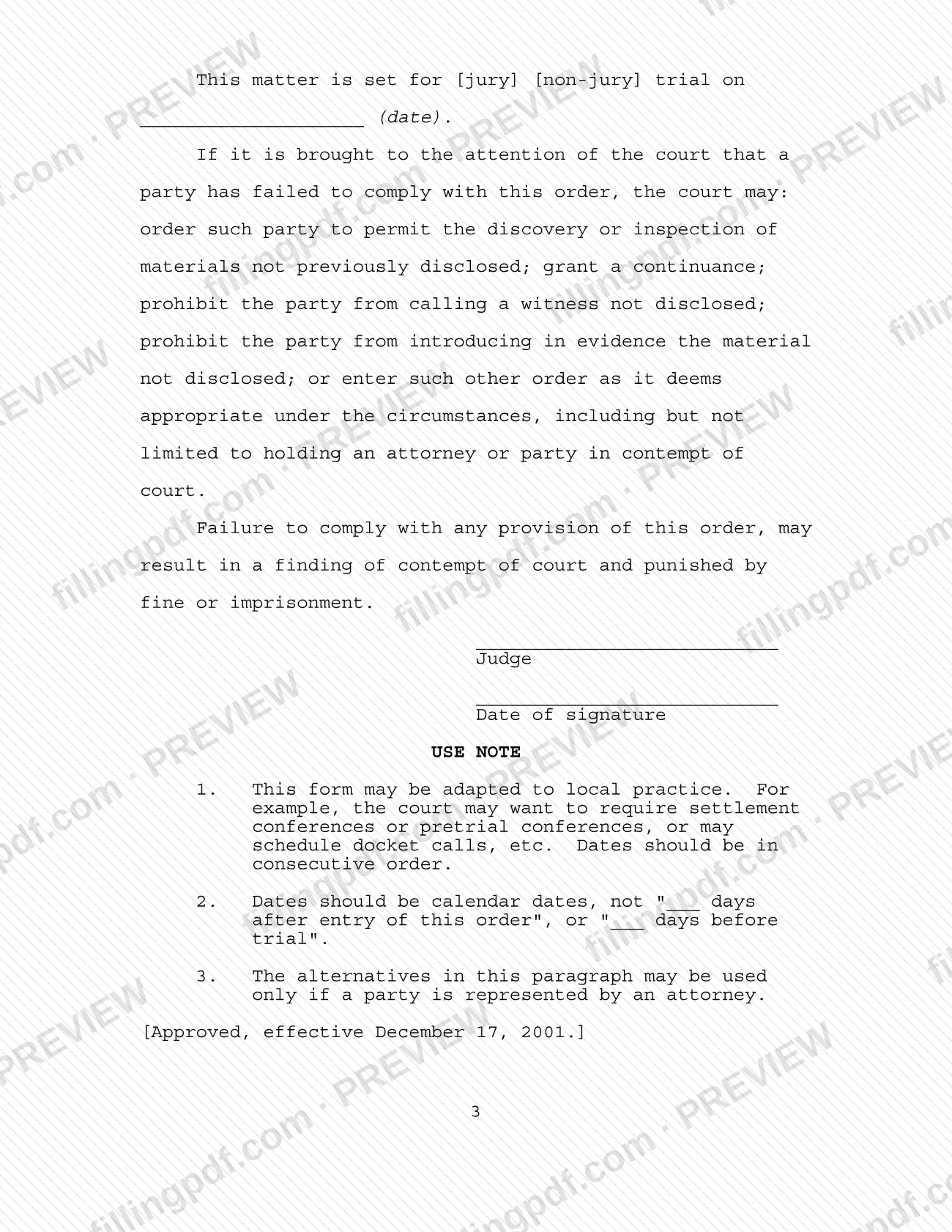
The order also states whether the matter is set for jury or non-jury trial and the trial date, warns of what the court may do if a party fails to comply, and closes with lines for the judge's signature and the date of signature. Text in square brackets is optional or alternative wording. The form's use notes say it may be adapted to local practice. It was approved effective December 17, 2001.
Who needs to file 4-506?
The court that is managing the case uses this form to issue the order, and the judge signs it. The plaintiff and the defendant named in the caption are the people it binds: the order begins by stating that the parties shall comply with it.
The title places the form with magistrate and metropolitan court cases. The use notes say the form may be adapted to local practice, for example to require settlement conferences or pretrial conferences or to schedule docket calls.
Conditions printed on the form:
- The bracketed alternatives in paragraph 9, proposed jury instructions or proposed findings of fact and conclusions of law, may be used only if a party is represented by an attorney.
- The jury or non-jury trial setting and the trial date are entered in the order.
- Any party may request a pretrial conference by filing a written request that states the purpose of the conference.
The form does not say who prepares the draft before the judge signs. It states only that the dates in the order may be changed by the court alone.
When to file 4-506
The form prints no filing deadline of its own. It is the order that creates the deadlines for the case, so it is completed and signed by the judge before the first date in it arrives.
The dates inside the order follow rules printed in the use notes. They must be calendar dates, not "___ days after entry of this order" or "___ days before trial", and they should be in consecutive order. When the order says a document shall be submitted by a certain date, the recipient must have received it by that date. Dates may be changed only by the court.
Paragraph 10 adds that any party may request a pretrial conference by filing a written request, and that the parties must advise the court promptly if the case is settled.
How to fill out 4-506
Complete the caption
Enter the county, the name of the court, the plaintiff and defendant names and the case number (No.) in the heading under State of New Mexico.
Set the pleading and motion dates
Enter calendar dates for paragraph 1 (motions to amend the pleadings or to join parties) and paragraph 2 (motions addressed to the pleadings).
Set the discovery and motions dates
Enter the date by which any permitted discovery must be completed in paragraph 3 and the date by which all motions must be filed in paragraph 4.
Set the witness list dates
In paragraph 5 enter the plaintiff's date and in paragraph 6 the defendant's date for disclosing a witness list with names, addresses, telephone numbers and a summary of each witness's testimony.
Set the exhibit dates
In paragraph 7 enter the date by which the plaintiff makes exhibits available for inspection or copying, and in paragraph 8 the same date for the defendant.
Choose the paragraph 9 wording
Keep the proposed jury instructions or the proposed findings of fact and conclusions of law wording that applies and enter its date. These alternatives may be used only if a party is represented by an attorney.
Add any conference or hearing dates
Under paragraph 10, enter dates for the settlement conference, motion hearing or pretrial conference only if the court schedules them; remove the bracketed lines that do not apply.
Enter the trial setting
Choose [jury] or [non-jury] and enter the trial date in the sentence beginning "This matter is set for".
Check the dates against the use notes
Confirm that every date is a calendar date and that the dates run in consecutive order. Adapt the form to local practice only as the court requires.
Review, sign and download the PDF
The judge signs on the Judge line and enters the Date of signature. Download or print the completed PDF from FillingPDF and handle it through the court's own channels described under How to submit.
How to submit 4-506
The form names no filing channel, address or portal. It is a court order: once the blanks are completed, the judge signs it and enters the date of signature.
What the document does say about delivery concerns the dates it sets. A document that the order says must be submitted by a certain date has to be received by the recipient by that date, so mailing or sending it on that date is not enough. A request for a pretrial conference is made by filing a written request that states its purpose. For how the court enters and serves its orders, ask the clerk of the court named in the caption; the New Mexico Judicial Branch publishes its forms library at https://nmcourts.gov/forms-library/. FillingPDF lets you fill out and download the PDF; submission follows the court's own channels.
Common mistakes to avoid
- Writing deadlines as "___ days after entry of this order" or "___ days before trial"; the use notes require calendar dates.
- Entering dates out of sequence; the use notes say dates should be in consecutive order.
- Using the bracketed jury-instruction or findings-of-fact alternatives in paragraph 9 when no party is represented by an attorney.
- Leaving the bracketed choices unresolved, such as [jury] or [non-jury] for the trial setting, or the optional conference and hearing dates.
- Treating a document as on time because it was sent by the deadline; the order requires that the recipient receive it by that date.
- Assuming the parties can move a deadline by agreement; the order states that dates may be changed only by the court.
- Issuing the order without the judge's signature and the date of signature.
- Ignoring paragraphs 5 to 8: a witness list must include names, addresses, telephone numbers and a summary of each witness's testimony.
Frequently asked questions
What is a scheduling order in New Mexico magistrate and metropolitan court?
It is a court order, Form 4-506, that gives the parties calendar dates for amending pleadings, motions, discovery, witness lists, exhibits and any conferences, and states the trial setting. The judge signs it, and the parties must follow it.
Who signs Form 4-506?
The judge signs it. The form has a signature line marked Judge and a separate line for the date of signature. The parties named in the caption are the ones the order directs to comply.
Can I write "30 days after entry of this order" instead of a date?
No. The use notes say dates should be calendar dates, not "___ days after entry of this order" or "___ days before trial". They also say the dates should be in consecutive order.
Can the parties change a date in the scheduling order?
No. The order states that dates may be changed only by the court. A party who needs a different date has to ask the court rather than treat the deadline as flexible.
What happens if a party does not follow the order?
The court may order discovery or inspection of materials not disclosed, grant a continuance, bar an undisclosed witness or undisclosed evidence, or enter another order it considers appropriate. Failure to comply may also result in a contempt finding punishable by fine or imprisonment.
Does a document count as submitted if I send it by the deadline?
Not necessarily. The order says that when a document must be submitted by a certain date, the recipient must have received it by that date. Allow enough time for delivery.
Can I use the jury instruction option in paragraph 9 if I have no lawyer?
No. The use notes say the alternatives in paragraph 9, proposed jury instructions or proposed findings of fact and conclusions of law, may be used only if a party is represented by an attorney.
Can I fill out the scheduling order online?
Yes. You can fill out the Form 4-506 PDF online on FillingPDF and download or print it. FillingPDF is an independent service, not the New Mexico courts, and it does not file the order; the court handles it through its own channels.
Ready to fill out 4-506?
Fill out 4-506 now