
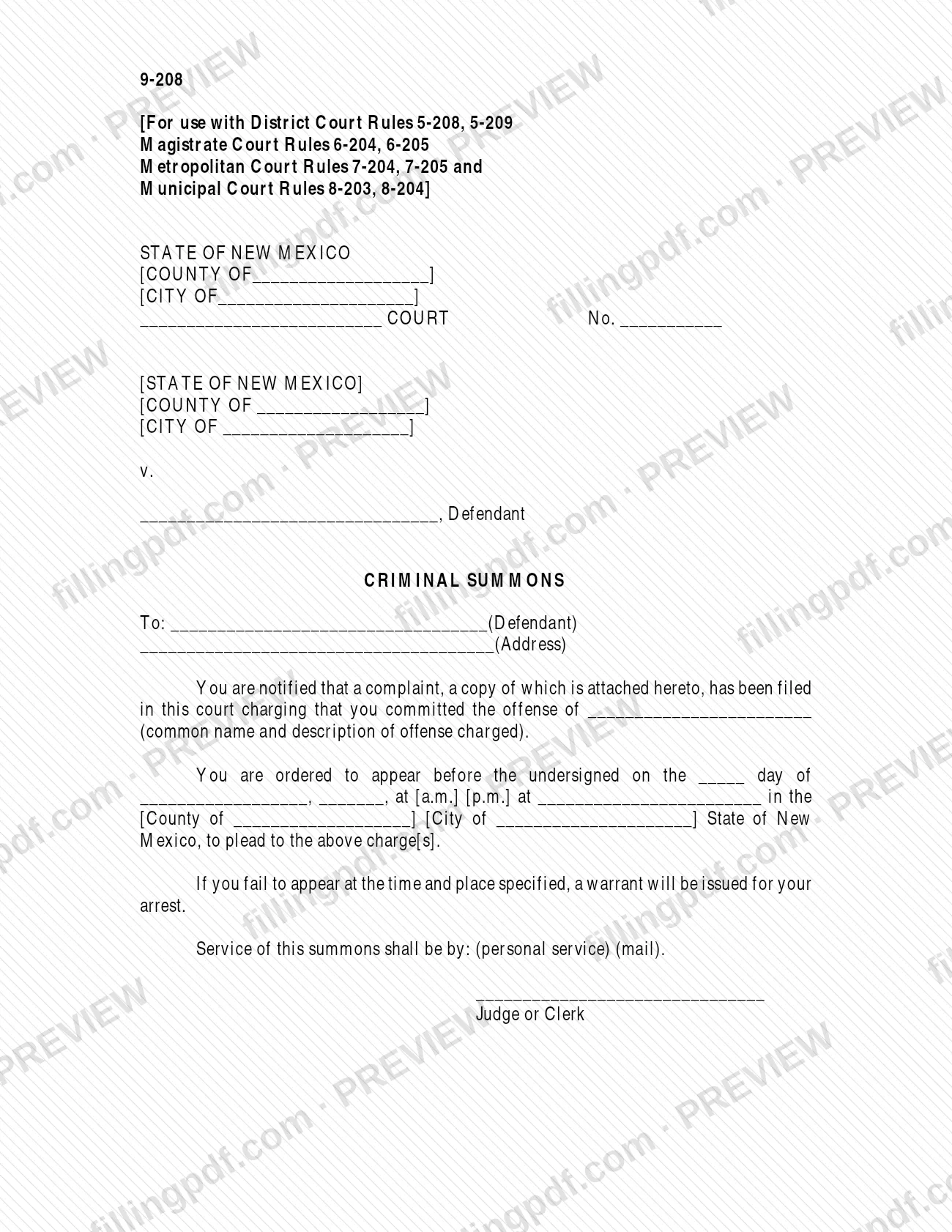
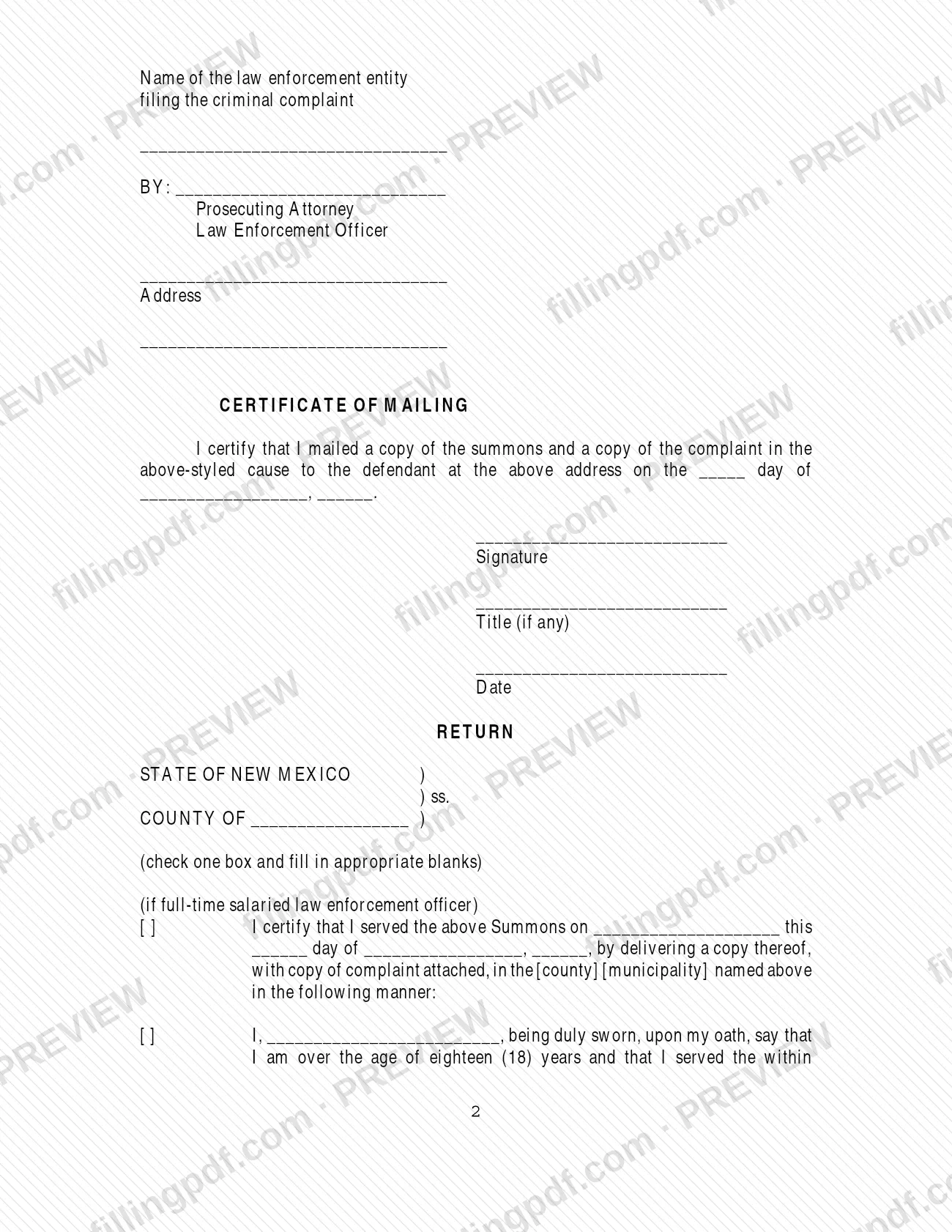
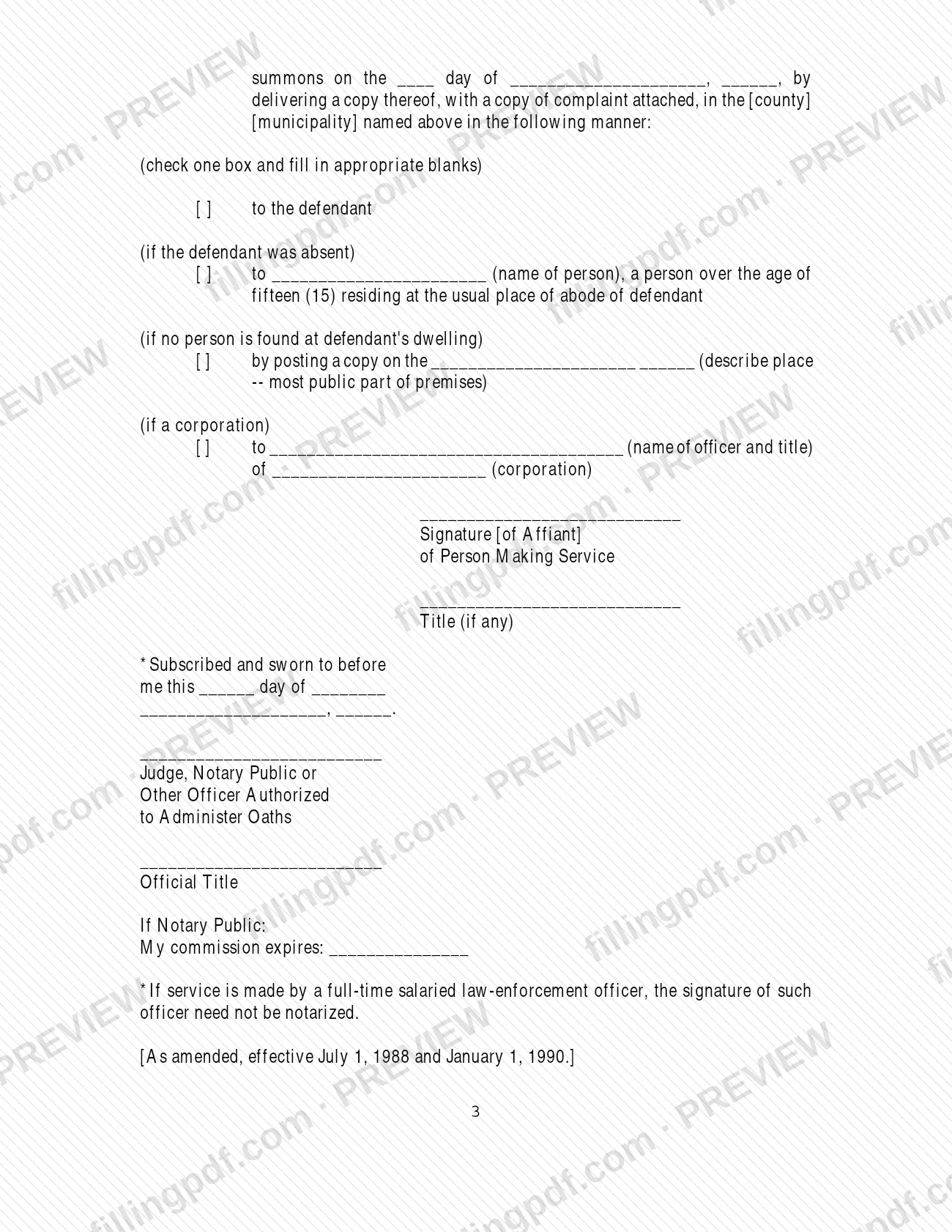
A criminal summons in New Mexico is Form 9-208, the court notice that tells a defendant a complaint charging an offense has been filed and orders the defendant to appear and plead. It is a Supreme Court approved form published by the New Mexico Judicial Branch for use in district, magistrate, metropolitan and municipal courts. On this page you can fill out the form online on FillingPDF and download or print the completed PDF; the form itself and the court forms library are published by the New Mexico courts at nmcourts.gov.
Last updated
What is 9-208?
Form 9-208, Criminal summons, is the New Mexico court form that notifies a defendant that a complaint, a copy of which is attached, has been filed charging an offense, and orders the defendant to appear at a stated date, time and place to plead to the charge or charges.
The form is a Supreme Court approved form of the New Mexico Judicial Branch. It is printed for use with several sets of court rules: District Court Rules 5-208 and 5-209, Magistrate Court Rules 6-204 and 6-205, Metropolitan Court Rules 7-204 and 7-205, and Municipal Court Rules 8-203 and 8-204. Bracketed lines for the county or city let the issuing court adapt the caption.
One document carries four parts:
- The summons itself, with the defendant's name and address, the offense charged (by common name and description), the appearance date, time and place, and the method of service: personal service or mail.
- A block for the law enforcement entity that filed the complaint, completed by a prosecuting attorney or law enforcement officer.
- A Certificate of Mailing, used when the summons and complaint are mailed to the defendant.
- A Return, in which the person who served the summons states how and when it was delivered.
The summons warns that if the defendant fails to appear at the time and place specified, a warrant will be issued for arrest. It is a notice to appear, not an arrest warrant.
Who needs to file 9-208?
The form is completed on the court and prosecution side of a criminal case, and it is directed to the defendant named on it.
- Judge or Clerk: signs the summons on the line printed "Judge or Clerk".
- Prosecuting attorney or law enforcement officer: the block for the law enforcement entity filing the criminal complaint is signed "BY" one of them, with the entity's name and address.
- Person who mails the summons: completes the Certificate of Mailing with a signature, title (if any) and date.
- Person who serves the summons: completes the Return. A full-time salaried law enforcement officer certifies the service and, per the form's note, does not need to have that signature notarized. Anyone else who serves must be over the age of eighteen (18) and swear to the service before a judge, notary public or other authorized officer.
- Defendant: the person ordered to appear. A defendant does not complete the form; the summons is delivered to the defendant with a copy of the complaint.
Use Form 9-208 only where the summons is issued under the court rules printed on it for the district, magistrate, metropolitan or municipal court.
When to file 9-208
The summons is prepared after a complaint has been filed in the court, because it notifies the defendant of that complaint and a copy of the complaint is attached to it. The form sets no separate filing deadline; the dates it asks for are the appearance date, time and place the court orders, and the date of service.
Complete the Certificate of Mailing on the date the summons and complaint are mailed to the defendant. Complete the Return on the date service is made, because it records the day the copy was delivered. The defendant must appear at the time and place specified on the summons; if the defendant does not, the form states that a warrant will be issued for arrest.
Documents you need
- A copy of the criminal complaint: it must be attached to the summons and delivered or mailed with it to the defendant.
- For service by someone other than a full-time salaried law enforcement officer: the Return sworn before a judge, notary public or other officer authorized to administer oaths.
How to fill out 9-208
Complete the court caption
Fill in the bracketed county or city lines, the name of the court and the court number, and the defendant's name after "v.". Keep the lines that fit your court and delete the rest.
Enter the defendant's name and address
On the To: line enter the defendant's name, and on the line below it enter the defendant's address.
Describe the offense charged
Enter the common name and description of the offense charged in the complaint. The complaint itself must be attached to the summons.
Set the appearance date and place
Enter the day, month and year, mark a.m. or p.m., and give the place where the defendant must appear in the county or city of New Mexico to plead to the charge or charges.
Choose the method of service
On the line "Service of this summons shall be by:" select personal service or mail.
Add the signatures and filing entity
The Judge or Clerk signs the summons. Enter the name of the law enforcement entity filing the complaint, then the signature of a prosecuting attorney or law enforcement officer after "BY:" and the entity's address.
Complete the Certificate of Mailing
If you serve by mail, enter the day, month and year the summons and complaint were mailed, then sign, add your title (if any) and date it.
Start the Return of service
Enter the county, then check one box: the full-time salaried law enforcement officer certification, or the sworn statement of a person over eighteen (18). Enter the name of the person served, the date, and whether delivery was in the county or municipality.
Select how service was made
Check one box: to the defendant; to a named person over fifteen (15) residing at the defendant's usual place of abode; by posting on the most public part of the premises, describing the place; or to a named officer and corporation.
Sign and swear the Return
The person making service signs and adds a title (if any). Unless the server is a full-time salaried law enforcement officer, complete the oath block with the date, the signature of the judge, notary public or other officer, an official title and, for a notary, the commission expiration date.
Review and download the completed PDF
Check that the complaint is ready to attach and that only the applicable boxes are marked. Download or print the completed PDF from FillingPDF and serve it through the court's process described under How to submit.
How to submit 9-208
The form names two ways to serve the summons on the defendant, and you choose one in the line "Service of this summons shall be by:": personal service or mail. It prints no court filing address, portal or fee, so ask the issuing court clerk's office where completed summonses and returns are filed.
- Mail: send a copy of the summons and a copy of the complaint to the defendant at the address on the summons, then sign and date the Certificate of Mailing.
- Personal service: deliver a copy of the summons with a copy of the complaint attached, in the county or municipality named, then complete the Return. Service may be made to the defendant; to a person over the age of fifteen (15) residing at the defendant's usual place of abode, if the defendant was absent; by posting a copy on the most public part of the premises, if no person is found at the dwelling; or, for a corporation, to a named officer.
Find the form and other criminal forms in the New Mexico courts forms library at https://nmcourts.gov/forms-library/. FillingPDF lets you fill out and download the PDF; submission and service follow the court's channels above.
Common mistakes to avoid
- Serving or mailing the summons without a copy of the complaint; the form says the complaint is attached and the Return states service was made with a copy of the complaint.
- Leaving blank the offense description; the form asks for the common name and description of the offense charged.
- Not selecting a service method (personal service or mail) on the line "Service of this summons shall be by:".
- Checking more than one box in the Return; the form says to check one box and fill in the appropriate blanks.
- Using the over-fifteen (15) abode option when the defendant was present or no one lives there; each service method applies only in its stated situation, such as posting only if no person is found at the dwelling.
- Having a person who is not a full-time salaried law enforcement officer sign the Return without swearing it before a judge, notary public or other authorized officer.
- Omitting the notary's commission expiration date when a notary public takes the oath.
- Leaving the Certificate of Mailing unsigned or undated when the summons is served by mail.
Frequently asked questions
What is a criminal summons in New Mexico?
It is a court notice, Form 9-208, telling a defendant that a complaint charging an offense has been filed and ordering the defendant to appear at a set date, time and place to plead. A copy of the complaint is attached to it.
What happens if I do not appear after getting a criminal summons?
The form states that if you fail to appear at the time and place specified, a warrant will be issued for your arrest. The summons itself is an order to appear and plead, not an arrest warrant.
Which New Mexico courts use Form 9-208?
The form is printed for use with District Court Rules 5-208 and 5-209, Magistrate Court Rules 6-204 and 6-205, Metropolitan Court Rules 7-204 and 7-205, and Municipal Court Rules 8-203 and 8-204.
How is a criminal summons served?
The summons is served by personal service or by mail, as selected on the form. By mail, the summons and complaint go to the defendant's address with a signed Certificate of Mailing; in person, the server completes the Return.
Who can serve a criminal summons?
The Return provides for a full-time salaried law enforcement officer, whose signature need not be notarized, or another person over the age of eighteen (18) who swears to the service before a judge, notary public or other authorized officer.
Can I serve the summons on someone other than the defendant?
Yes, in the cases the Return lists: a person over fifteen (15) residing at the defendant's usual place of abode if the defendant is absent, posting on the most public part of the premises if no one is found at the dwelling, or an officer of a corporation.
Can I fill out Form 9-208 online?
You can fill out the PDF online on FillingPDF and download or print it. FillingPDF does not file or serve the summons and is not connected to the New Mexico courts; service follows the form's own methods.
Ready to fill out 9-208?
Fill out 9-208 now