
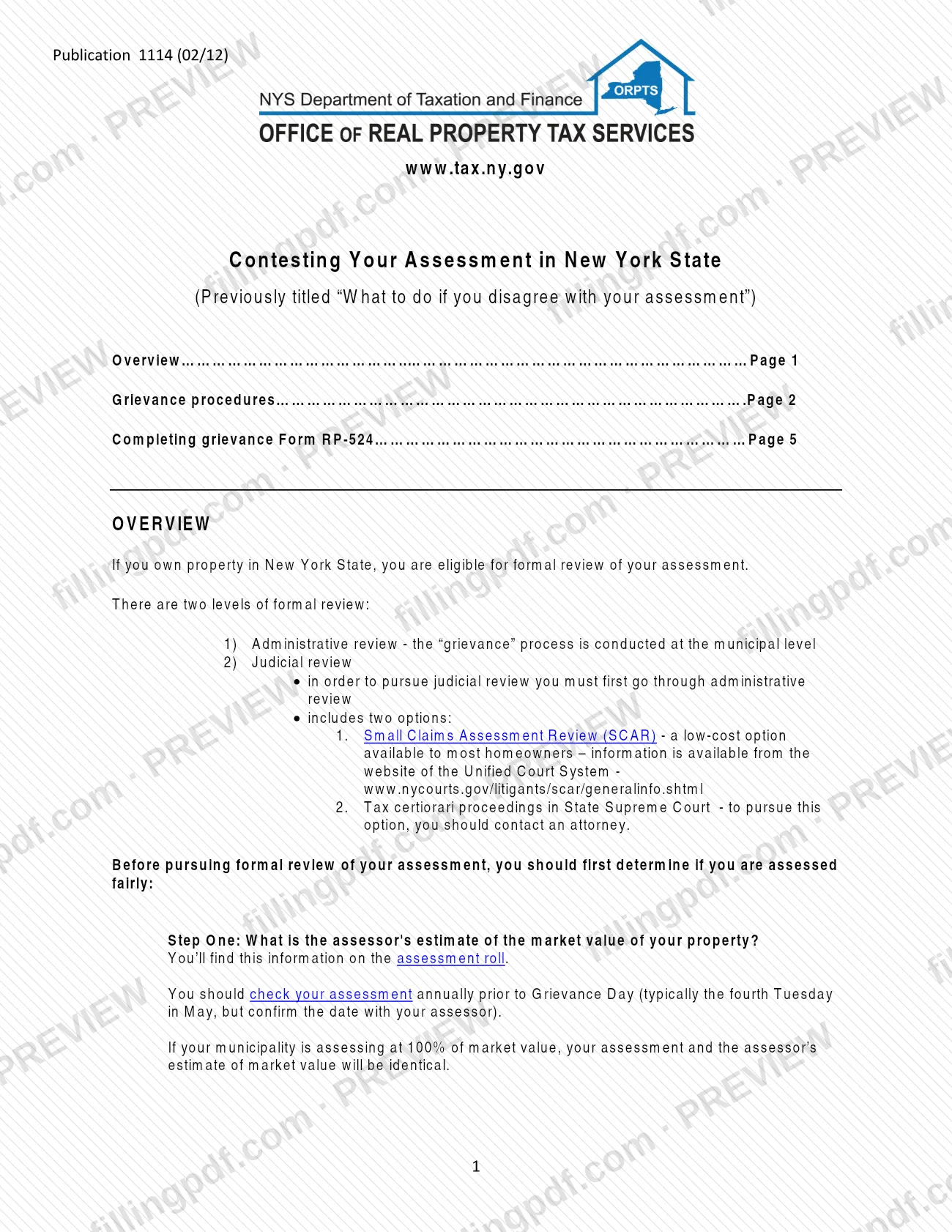
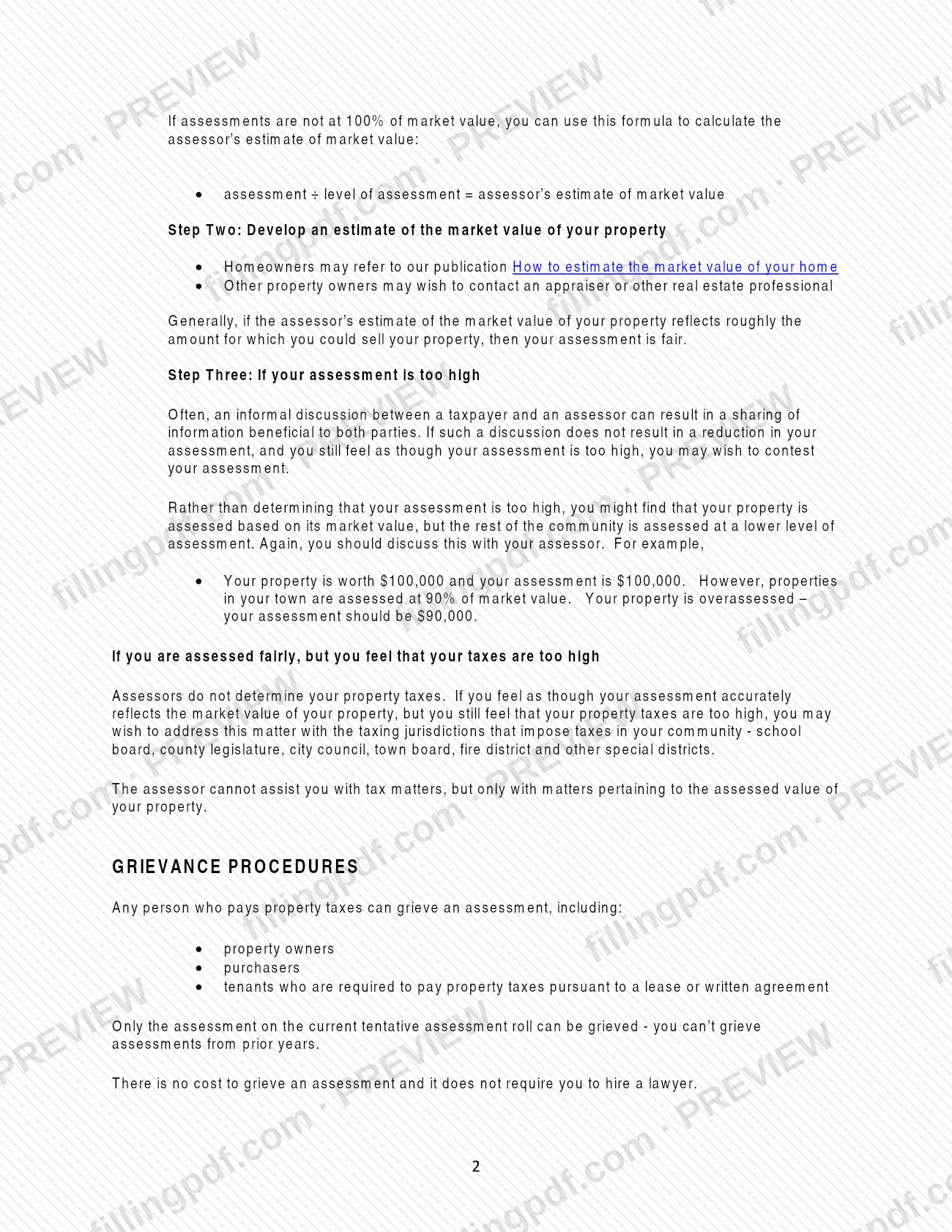
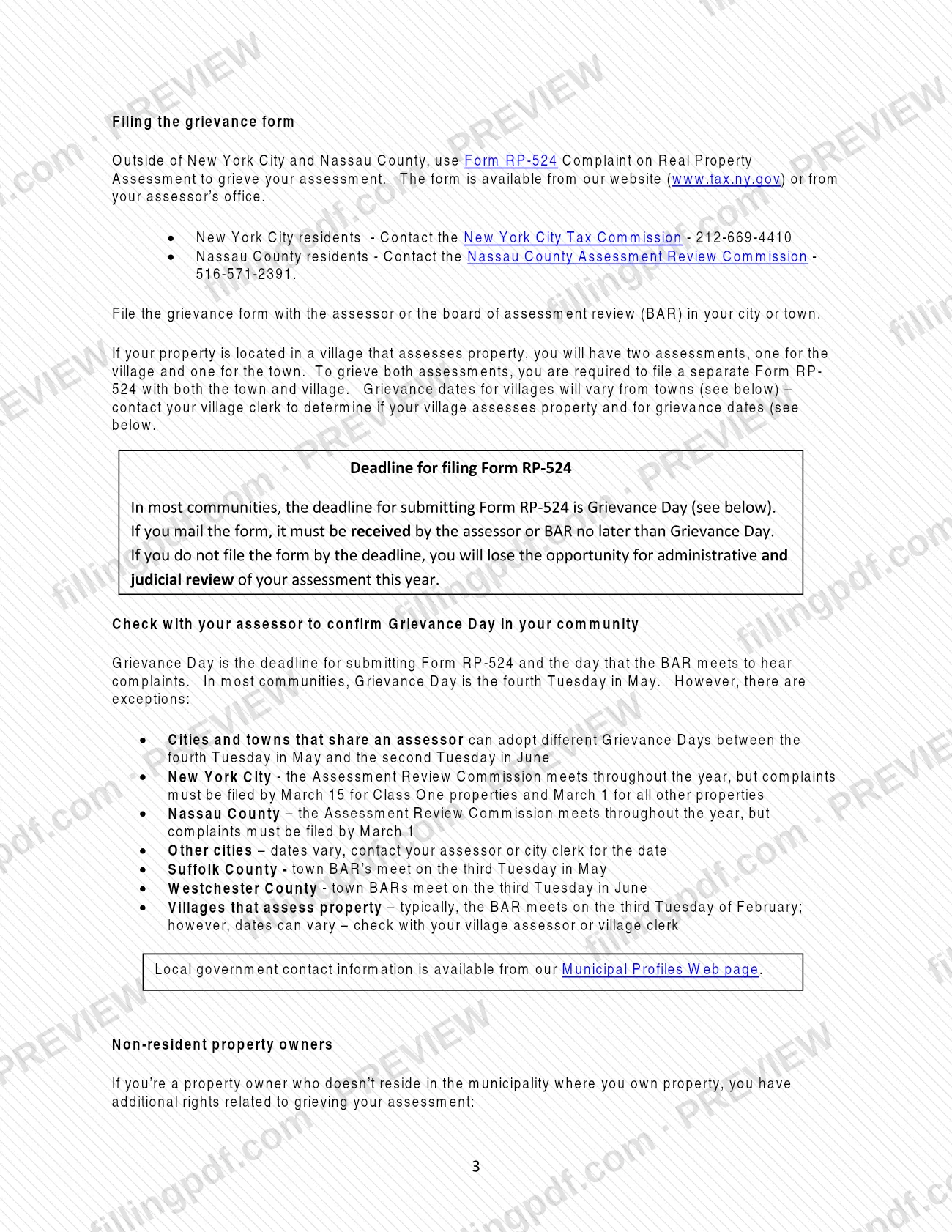
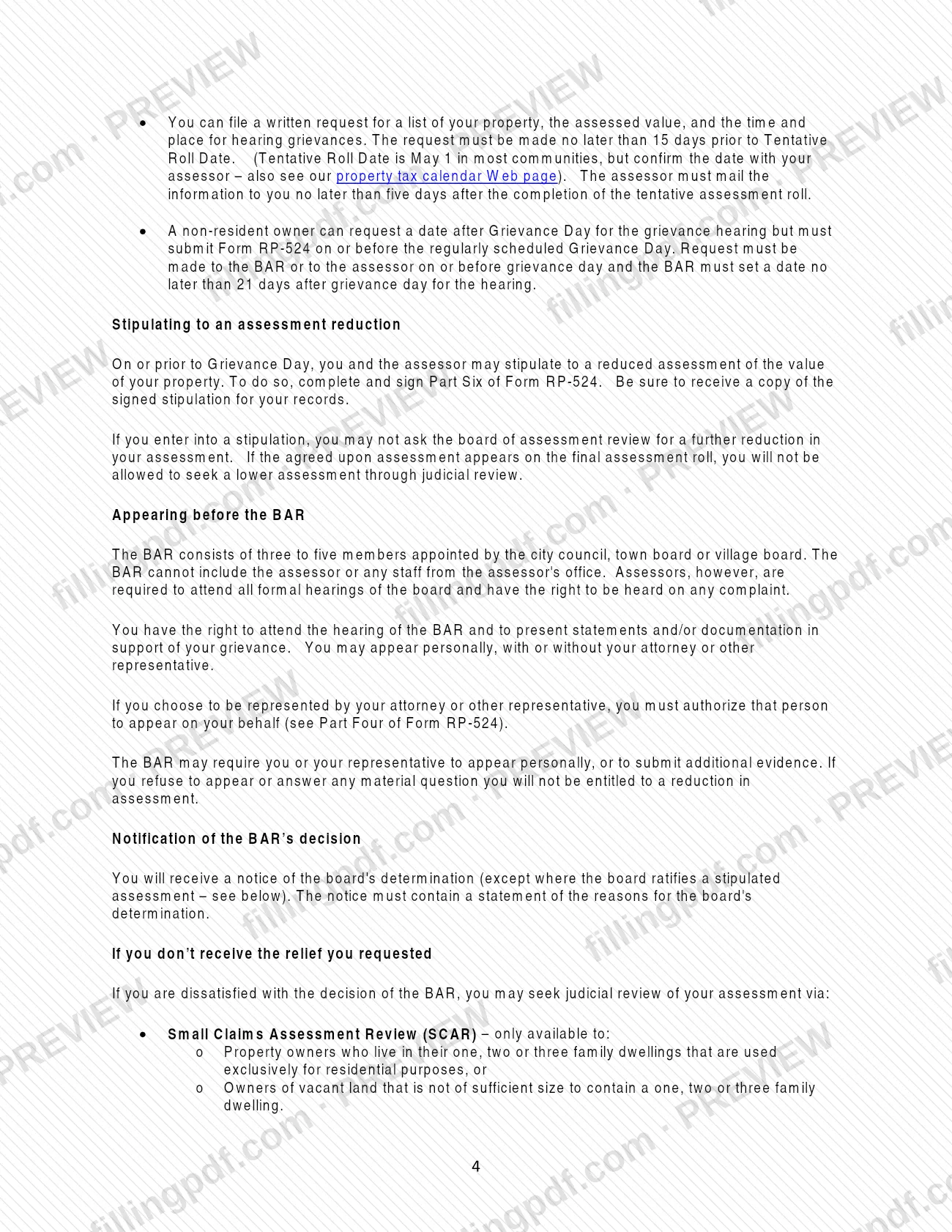
Publication 1114, Contesting Your Assessment in New York State, is the booklet that explains how to dispute a property assessment and how to complete Form RP-524, Complaint on Real Property Assessment. Onondaga County Finance / Tax offers it among its assessment materials, so it is one of the resources for Onondaga County property tax questions about assessed value. Homeowners, purchasers and tenants who pay property taxes use it to decide whether to grieve. On this page you can fill out the form online on FillingPDF and download or print the completed PDF; the original PDF is published at onondaga.gov.
Last updated
What is Publication 1114?
Publication 1114, Contesting Your Assessment in New York State is a New York State Department of Taxation and Finance booklet that explains how a property owner can challenge an assessment through the local grievance process and, if needed, through judicial review, and how to complete Form RP-524.
It was previously titled "What to do if you disagree with your assessment." The booklet is a guide, not the complaint itself: the complaint is Form RP-524, Complaint on Real Property Assessment, which is filed with the assessor or the board of assessment review (BAR).
The booklet covers three things:
- How to check whether your assessment is fair: find the assessor's estimate of market value on the assessment roll, divide your assessment by the level of assessment if the municipality does not assess at 100%, and compare the result with your own estimate of value.
- The grievance procedure: who may grieve, where to file, the deadline, BAR hearings, stipulations and the decision notice.
- Line-by-line help for Parts One through Six of Form RP-524, including the grounds for complaint: Unequal, Excessive, Unlawful and Misclassification.
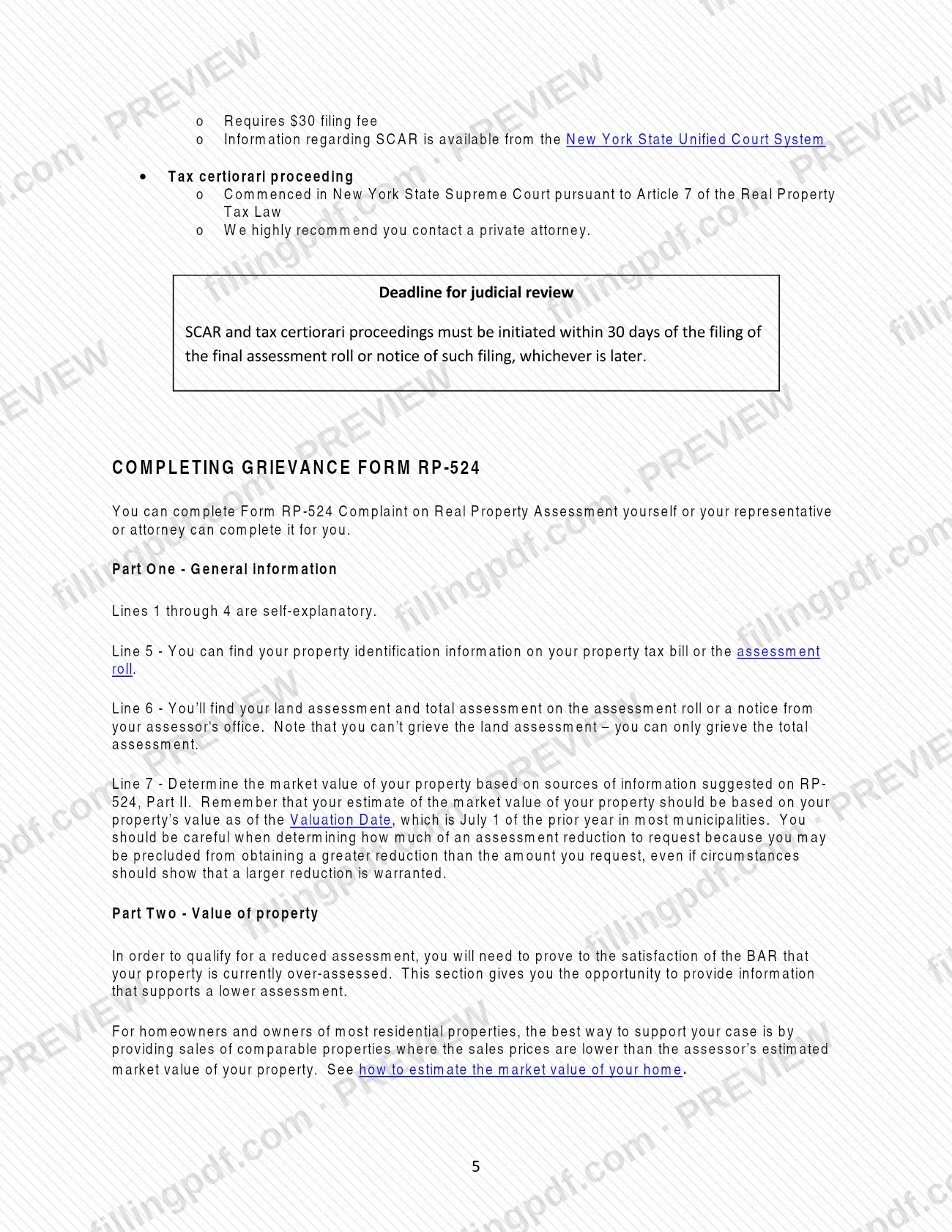
It also describes the two kinds of judicial review that follow a BAR decision: Small Claims Assessment Review (SCAR) and tax certiorari proceedings in State Supreme Court. It does not deal with the tax rate: assessors do not set property taxes.
Who needs to file Publication 1114?
Any person who pays property taxes can grieve an assessment, and the booklet is written for them. That includes:
- property owners;
- purchasers;
- tenants who must pay property taxes under a lease or written agreement.
Conditions and exclusions the booklet states:
- Outside New York City and Nassau County, you use Form RP-524. New York City residents contact the New York City Tax Commission, and Nassau County residents contact the Nassau County Assessment Review Commission.
- Only the assessment on the current tentative assessment roll can be grieved, not assessments from prior years.
- You cannot grieve the land assessment alone, only the total assessment.
- If your assessment is fair but you think your taxes are too high, take it up with the taxing jurisdictions (school board, county legislature, city council, town board, fire district and other special districts), not the assessor.
- Owners who do not live in the municipality have extra rights, such as asking for a hearing date after Grievance Day.
You may complete the form yourself, or an attorney or other representative may complete it for you. A representative who appears for you must be authorized in Part Four of Form RP-524.
When to file Publication 1114
The deadline for Form RP-524 is Grievance Day, which in most communities is the fourth Tuesday in May. Confirm the date with your assessor.
Exceptions the booklet lists: cities and towns that share an assessor can set a different date between the fourth Tuesday in May and the second Tuesday in June; Suffolk County town BARs meet on the third Tuesday in May; Westchester County town BARs meet on the third Tuesday in June; villages that assess property typically meet on the third Tuesday of February; other cities vary. New York City and Nassau County use earlier March filing dates.
If you mail the form, the assessor or BAR must receive it no later than Grievance Day. A form filed late costs you administrative and judicial review for that year. A stipulation with the assessor must be made on or before Grievance Day.
If the BAR decision disappoints you, SCAR and tax certiorari proceedings must begin within 30 days of the filing of the final assessment roll or notice of the filing, whichever is later.
Documents you need
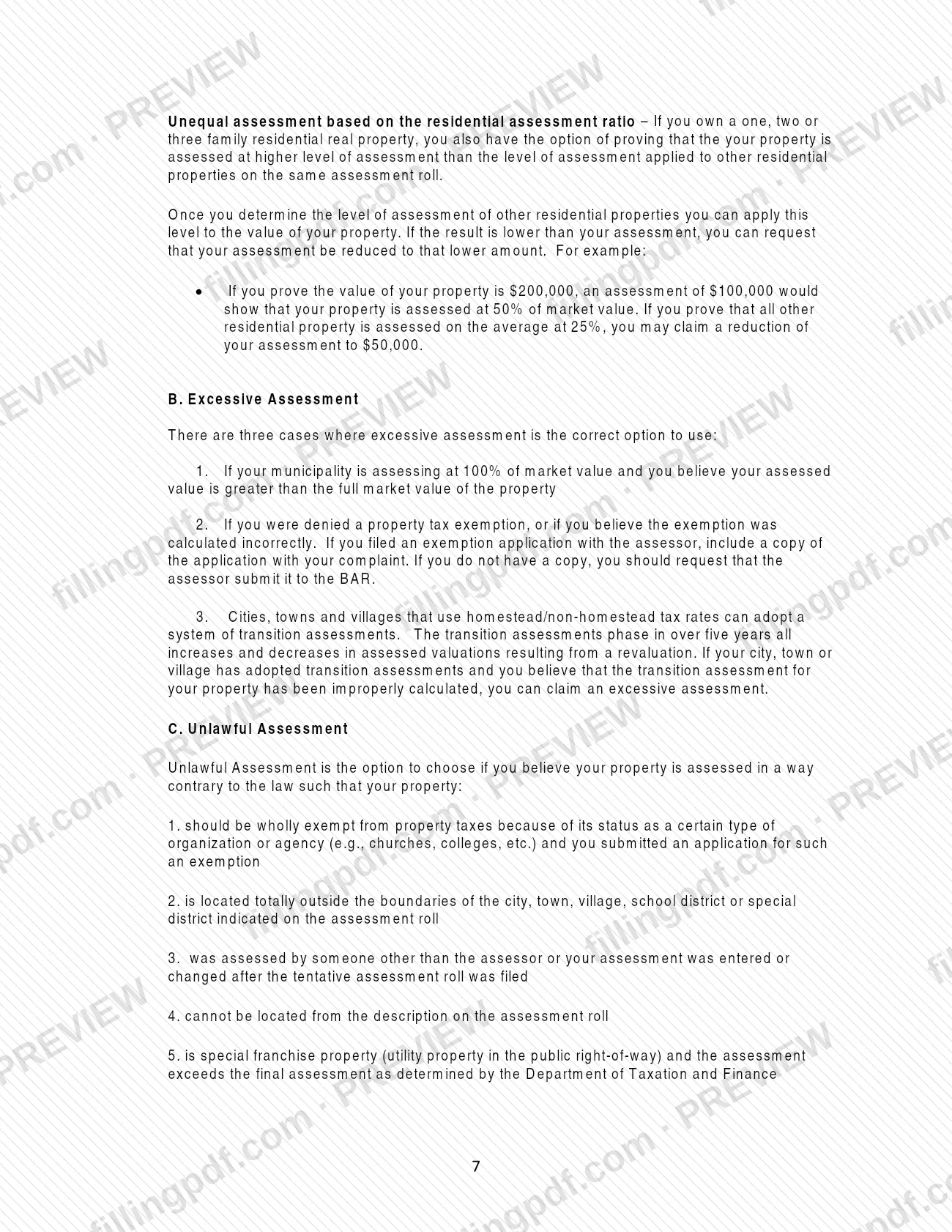
- A copy of your exemption application, if you grieve because an exemption was denied or calculated incorrectly and you filed one with the assessor; if you have no copy, ask the assessor to submit it to the BAR.
- Evidence of value for Part Two, such as sales of comparable properties with prices lower than the assessor's estimate of your market value; the BAR may also require additional evidence.
- Written authorization in Part Four of Form RP-524, only if an attorney or other representative will appear for you before the BAR.
- A copy of the signed stipulation for your records, only if you and the assessor agree to a reduced assessment under Part Six.
How to fill out Publication 1114
Check whether your assessment is fair
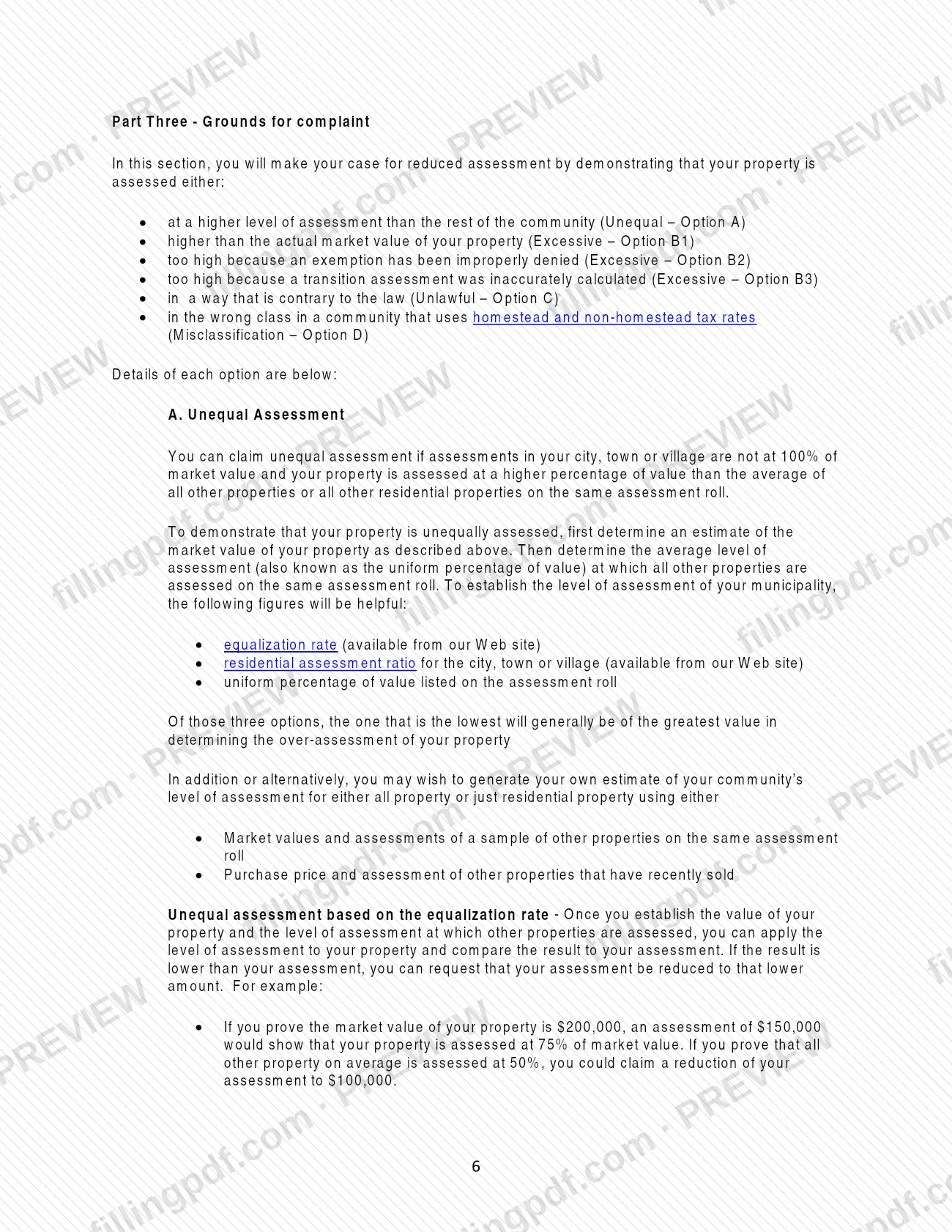
Find the assessor's estimate of market value on the assessment roll; if the level of assessment is below 100%, divide your assessment by it. Compare the result with your own estimate of value, and talk to your assessor first.
Get Form RP-524
Download Form RP-524, Complaint on Real Property Assessment, from www.tax.ny.gov or ask your assessor's office. Use it outside New York City and Nassau County.
Complete Part One, lines 1 through 5
Lines 1 through 4 are self-explanatory. On line 5, enter your property identification information from your tax bill or the assessment roll.
Enter your assessments on line 6
Take your land assessment and total assessment from the assessment roll or a notice from the assessor. Remember that only the total assessment can be grieved.
Enter your market value on line 7
Base your estimate on the Valuation Date, July 1 of the prior year in most municipalities. Choose the reduction you request carefully, because you may not get more than you ask for.
Support your value in Part Two
Give information that proves to the BAR that the property is over-assessed. For most residential properties, sales of comparable properties at prices lower than the assessor's estimate are the best support.
Choose your grounds in Part Three
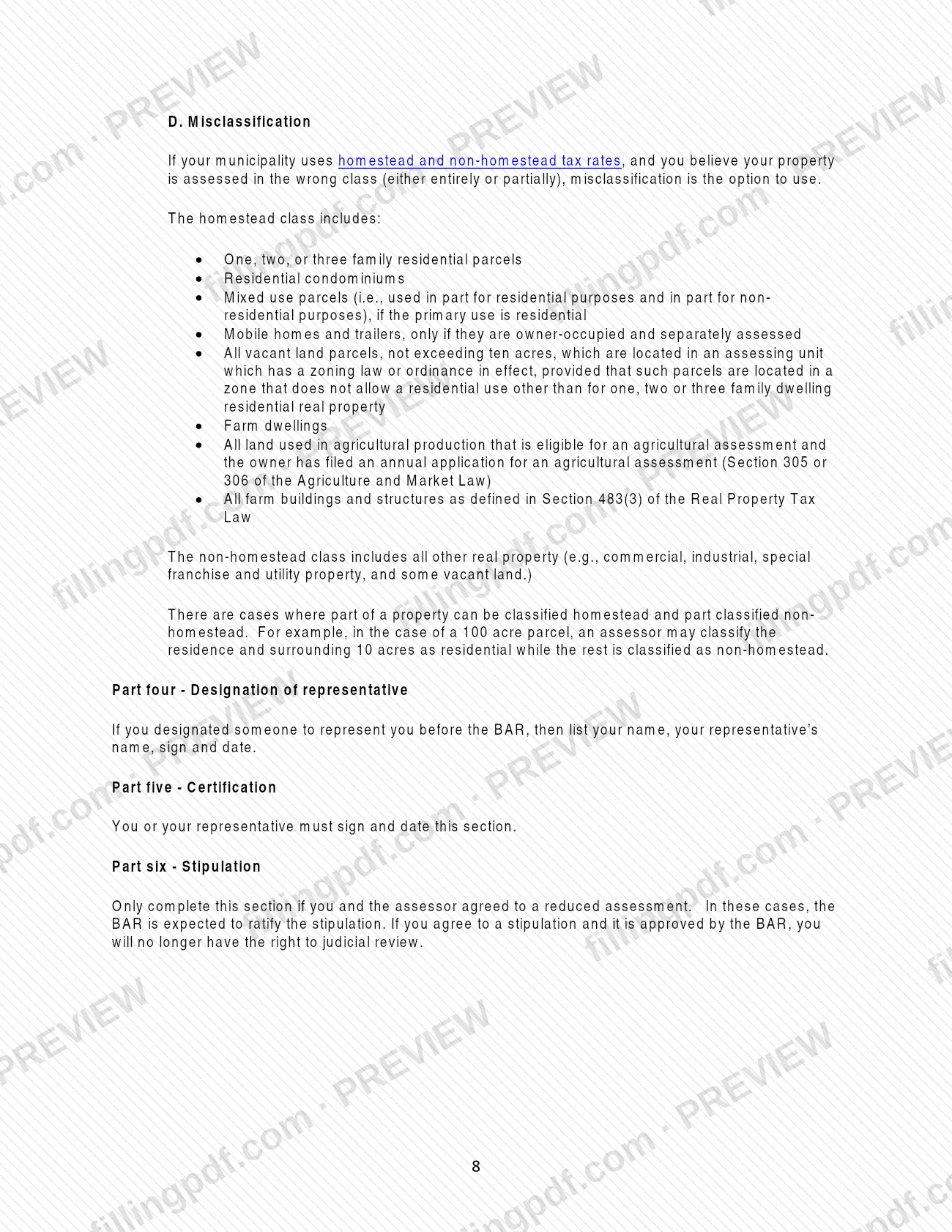
Select Unequal (Option A), Excessive (Option B1, B2 or B3), Unlawful (Option C) or Misclassification (Option D). Each option has its own conditions in the booklet; use B2 for a denied exemption and attach your exemption application.
Name a representative in Part Four
Complete this part only if someone will represent you before the BAR. List your name and your representative's name, then sign and date.
Sign the certification in Part Five
You or your representative must sign and date this section.
Complete Part Six only for a stipulation
Fill it in only if you and the assessor agreed to a reduced assessment on or before Grievance Day, and keep a copy of the signed stipulation.
Review and download the completed PDF
Check that every part is complete and the signature is in place. Download or print the completed PDF from FillingPDF and file it with the assessor or BAR as described under How to submit.
How to submit Publication 1114
Form RP-524 is filed with the assessor or the board of assessment review (BAR) in your city or town; the booklet names no online filing portal.
- Where to get the form: from www.tax.ny.gov or from your assessor's office.
- Filing: file with the assessor or the BAR. If you mail it, it must be received by Grievance Day.
- Villages that assess property: you have a village assessment and a town assessment. To grieve both, file a separate Form RP-524 with the town and with the village. Contact your village clerk for the grievance date.
- New York City: contact the New York City Tax Commission at 212-669-4410.
- Nassau County: contact the Nassau County Assessment Review Commission at 516-571-2391.
- Hearing: you may appear before the BAR in person, with or without an attorney or other representative.
There is no cost to grieve an assessment, and you do not need a lawyer. A filing fee applies to a SCAR petition; get the amount from the New York State Unified Court System. Onondaga County Finance / Tax lists its assessment pages at https://onondaga.gov/rpts/assessment-information/. FillingPDF lets you fill out and download the PDF; submission follows the channels above.
Common mistakes to avoid
- Filing Form RP-524 after Grievance Day; the booklet says you lose administrative and judicial review of that year's assessment.
- Mailing the form so that it arrives after Grievance Day; a mailed form must be received by the assessor or BAR by that date.
- Trying to grieve only the land assessment; only the total assessment can be grieved.
- Requesting a smaller reduction on line 7 than you may deserve; you may be unable to obtain more than the amount you request.
- Filing only with the town when a village also assesses the property; each assessment needs its own Form RP-524.
- Estimating market value as of the wrong date; use the Valuation Date, July 1 of the prior year in most municipalities.
- Signing a stipulation in Part Six and then expecting to ask the BAR for more or to seek judicial review.
- Naming a representative without completing Part Four, or refusing to appear or answer a material BAR question, which can cost you the reduction.
- Using Form RP-524 in New York City or Nassau County, where the booklet directs you to the local commissions instead.
Frequently asked questions
What is Publication 1114?
Publication 1114, Contesting Your Assessment in New York State, is a booklet explaining how to check whether your property assessment is fair, how the grievance process works and how to complete Form RP-524. Onondaga County Finance / Tax offers it as a PDF with its assessment materials.
Who can grieve a property assessment in New York?
Any person who pays property taxes: property owners, purchasers, and tenants who must pay property taxes under a lease or written agreement. There is no cost to grieve, and you do not need to hire a lawyer.
When is Grievance Day?
In most communities it is the fourth Tuesday in May, but some cities, towns, villages and counties differ. Confirm the date with your assessor. A mailed Form RP-524 must be received by the assessor or BAR no later than Grievance Day.
What happens if I miss the grievance deadline?
You lose the opportunity for administrative and judicial review of your assessment for that year. Only the assessment on the current tentative roll can be grieved, so a prior-year assessment cannot be challenged later.
Which form do I file to grieve my assessment?
Outside New York City and Nassau County, file Form RP-524, Complaint on Real Property Assessment, with the assessor or board of assessment review. Get it from www.tax.ny.gov or your assessor's office. If a village also assesses your property, file a separate form with the village.
Can someone else represent me at the BAR hearing?
Yes. You may appear with or without an attorney or other representative, but you must authorize the person to appear for you in Part Four of Form RP-524. The BAR may still require you to appear personally or submit more evidence.
What can I do if the BAR denies my grievance?
You may seek judicial review through Small Claims Assessment Review (SCAR), for owner-occupied one-, two- or three-family homes and some vacant land, or a tax certiorari proceeding in State Supreme Court. Start either within 30 days of the final assessment roll filing or notice, whichever is later.
Can I fill out Publication 1114 online on FillingPDF?
You can fill out the PDF online on FillingPDF and download or print it. FillingPDF is an independent service, not connected to Onondaga County or the State, and it does not file anything; you file Form RP-524 with the assessor or BAR.
Ready to fill out Publication 1114?
Fill out Publication 1114 now