
The Hunt County Standing Order Regarding Children, Property and Conduct of the Parties is an order of the Hunt County District Courts, effective 10/1/22, that sets rules for parents and spouses while a divorce or parent-child suit is pending. It is not a Hunt County property tax document: its property rules concern the spouses' assets during a divorce. On this page you can fill out the form online on FillingPDF and download or print the completed PDF; the original is published by Hunt County at the official link.
Last updated
What is Hunt County Standing Order Regarding Children, Property and Conduct of the Parties?
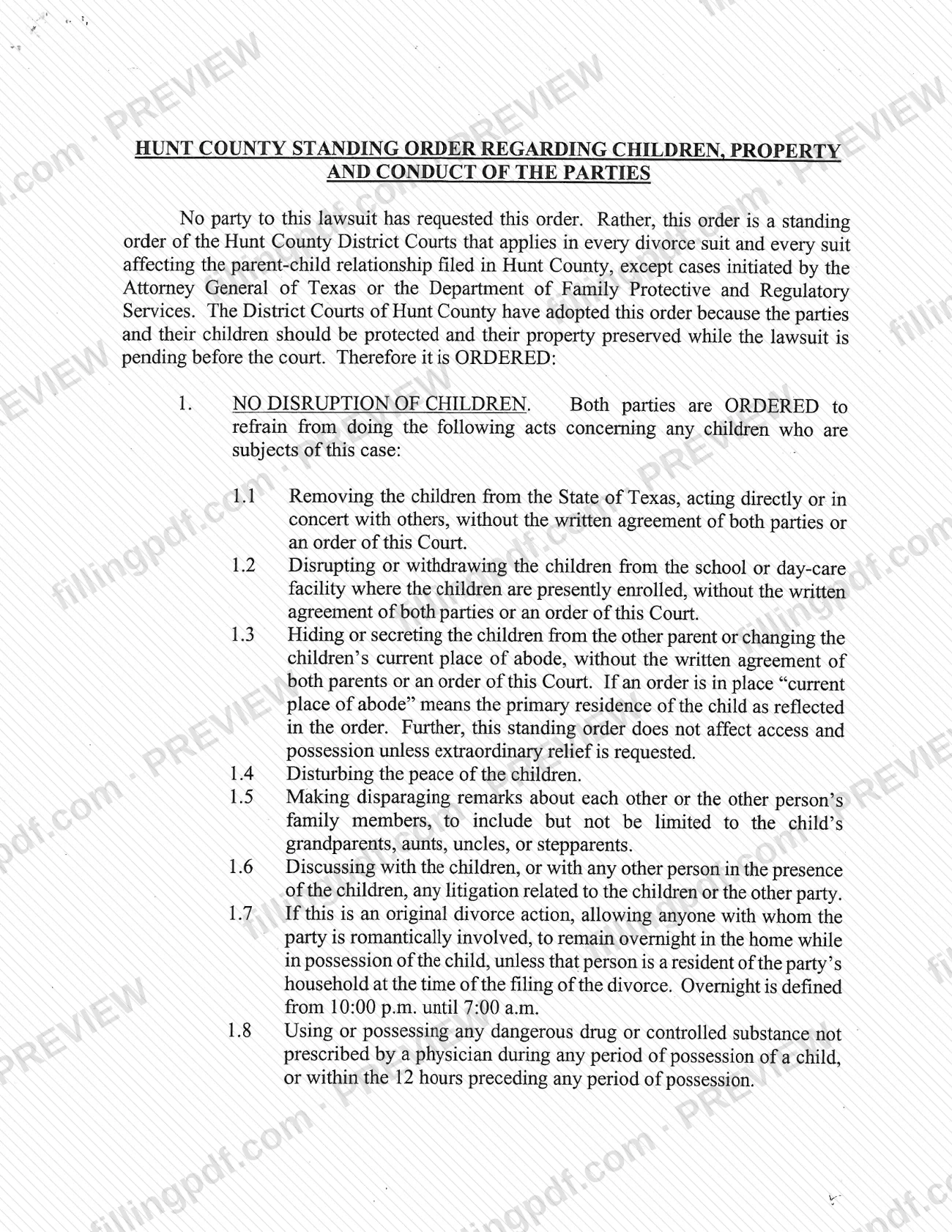
The Hunt County Standing Order Regarding Children, Property and Conduct of the Parties is a standing order of the Hunt County District Courts that applies in every divorce suit and every suit affecting the parent-child relationship filed in Hunt County, without any party asking for it.
The courts adopted it, in the order's own words, so that the parties and their children are protected and their property is preserved while the lawsuit is pending. It is organized in three parts:
- Section 1, No Disruption of Children: prohibits, among other acts, removing the children from Texas, withdrawing them from their school or day-care, hiding them, disparaging the other parent and discussing the litigation with the children.
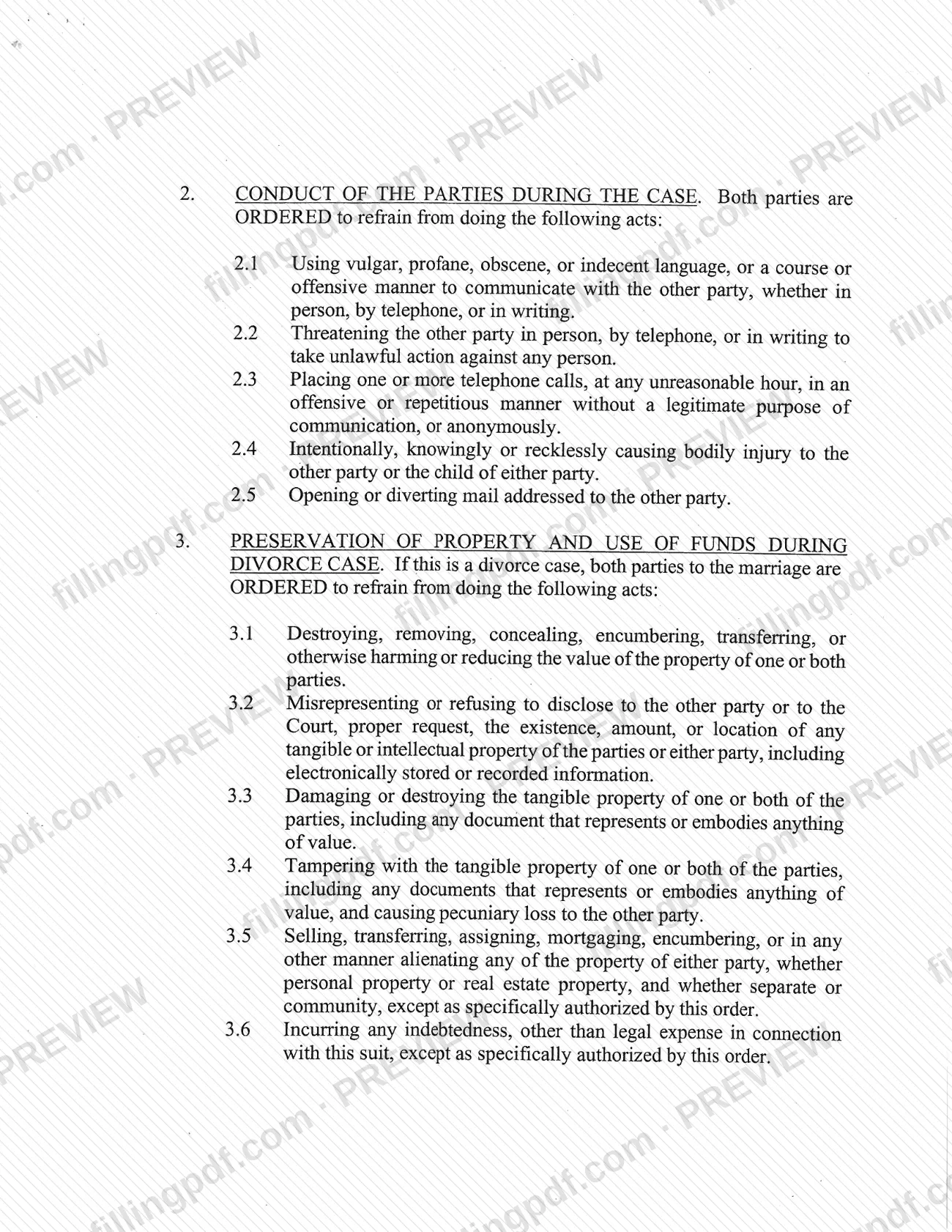
- Section 2, Conduct of the Parties During the Case: prohibits vulgar or threatening communication, offensive or anonymous phone calls, causing bodily injury, and opening or diverting the other party's mail.
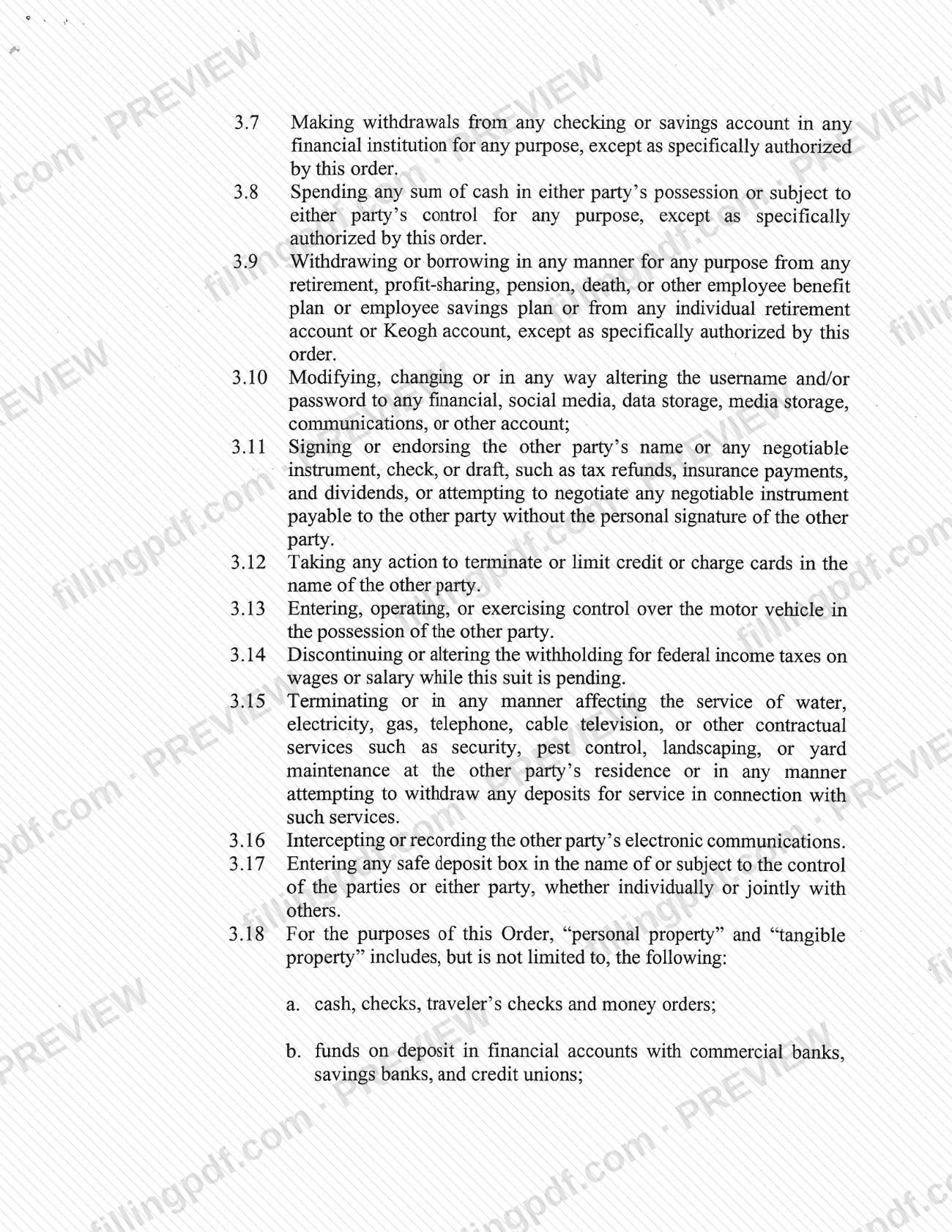
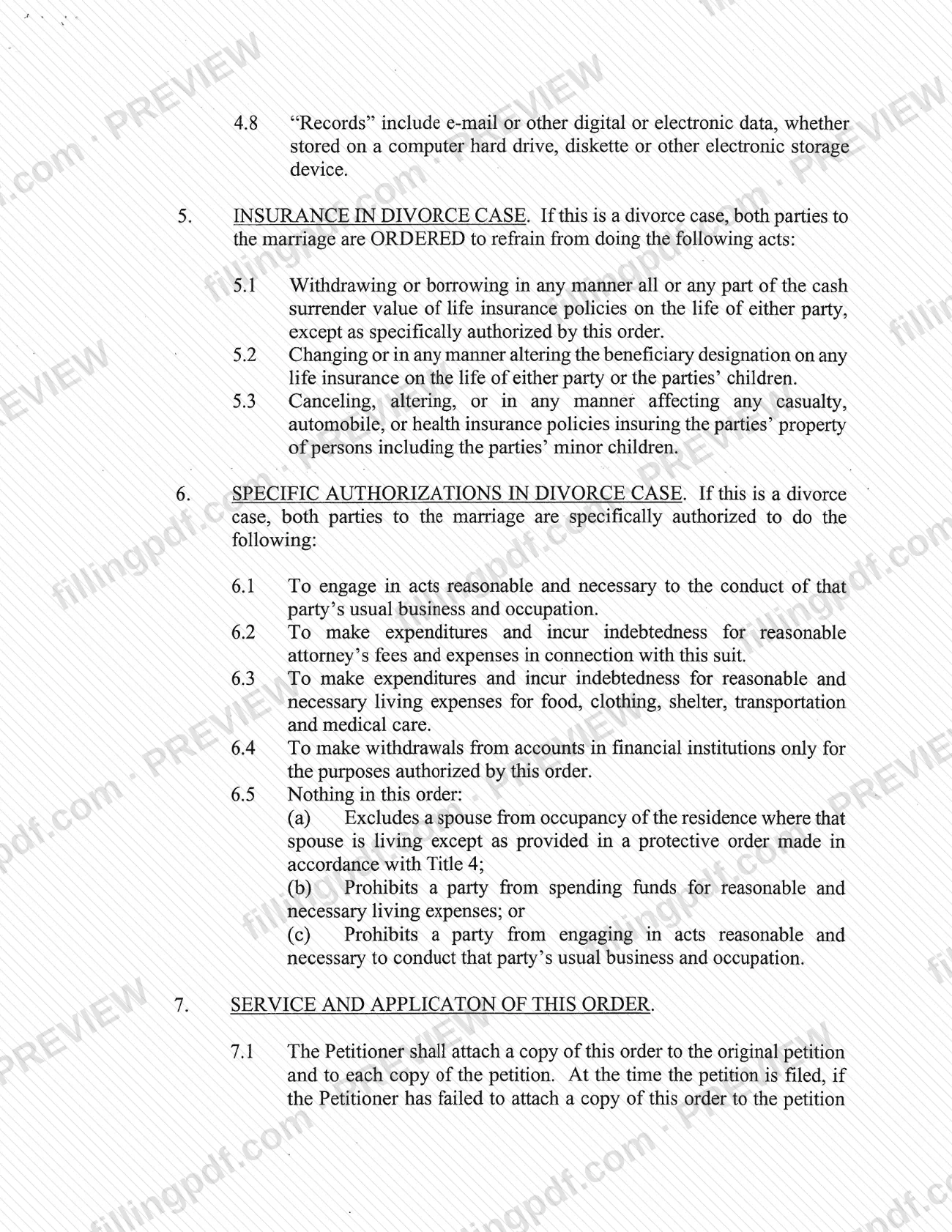
- Section 3, Preservation of Property and Use of Funds During Divorce Case: applies only if the case is a divorce. It restricts destroying, transferring or encumbering property, incurring debt, withdrawing from accounts and similar acts, except as the order specifically authorizes.
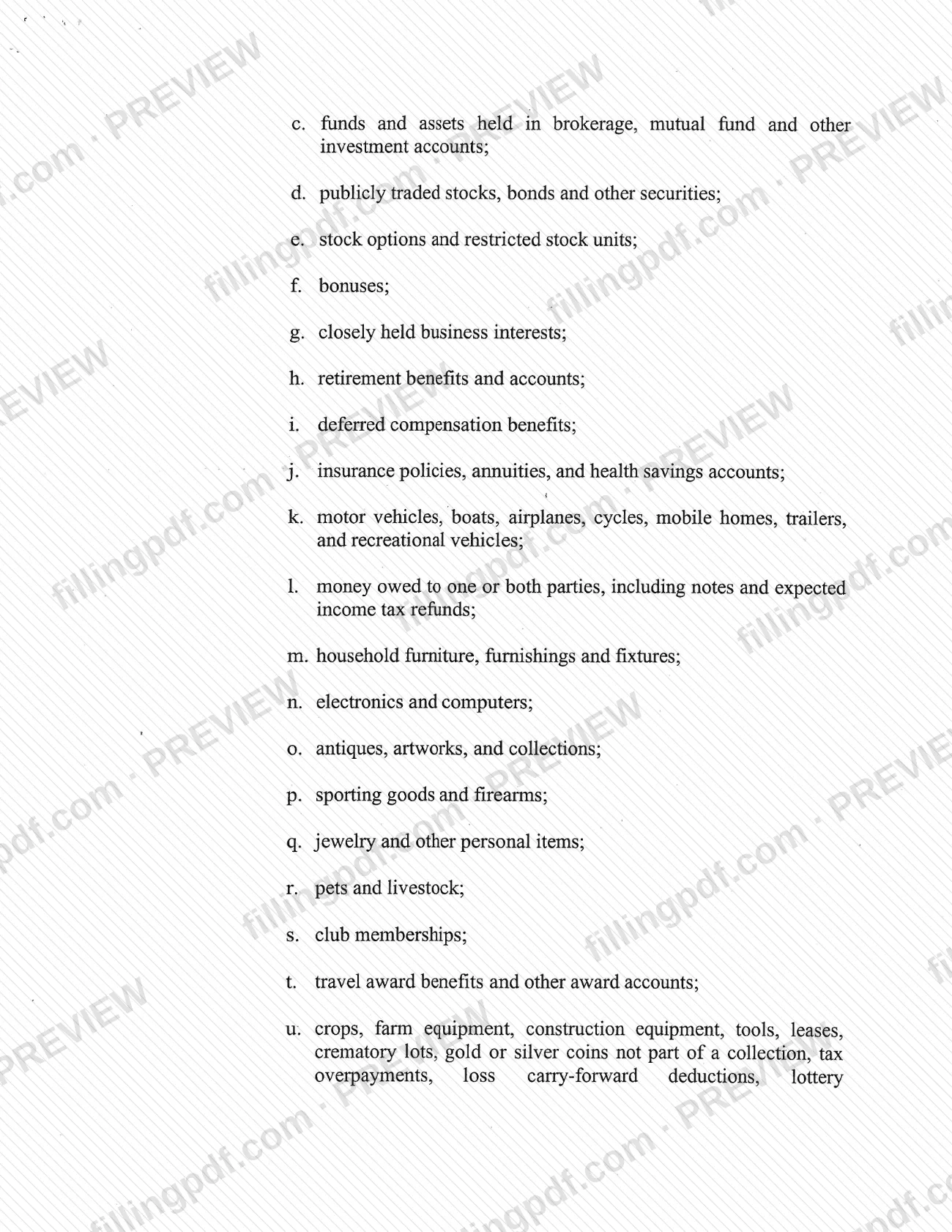
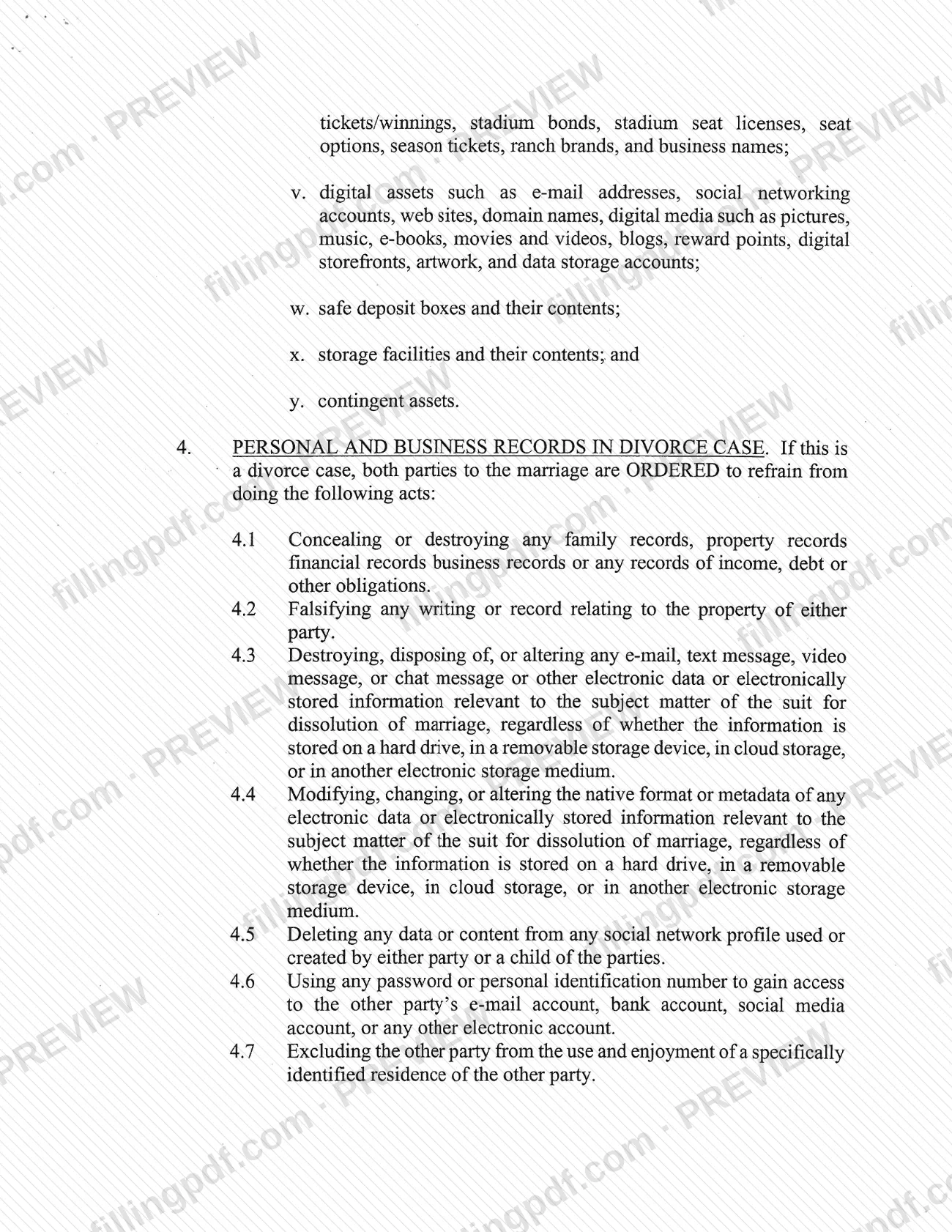
The order also lists what counts as personal and tangible property, from cash and bank accounts to vehicles, retirement accounts and expected income tax refunds. It is a court order and not a property tax form.
Who needs to file Hunt County Standing Order Regarding Children, Property and Conduct of the Parties?
The parties to a divorce suit or a suit affecting the parent-child relationship filed in Hunt County are bound by the order. It applies automatically; no party has to request it.
- Both parties in any covered suit are bound by Section 1 (children) and Section 2 (conduct).
- Spouses in a divorce case are also bound by Section 3 (property and use of funds). The order says Section 3 applies "if this is a divorce case."
- Original divorce actions carry one extra rule in item 1.7: a party may not allow anyone with whom they are romantically involved to stay overnight in the home while in possession of the child, unless that person lived in the party's household when the divorce was filed. Overnight means 10:00 p.m. to 7:00 a.m.
Excluded: cases initiated by the Attorney General of Texas or the Department of Family Protective and Regulatory Services. The order also states that it does not affect access and possession unless extraordinary relief is requested. It names no representative who may act for a party.
When to file Hunt County Standing Order Regarding Children, Property and Conduct of the Parties
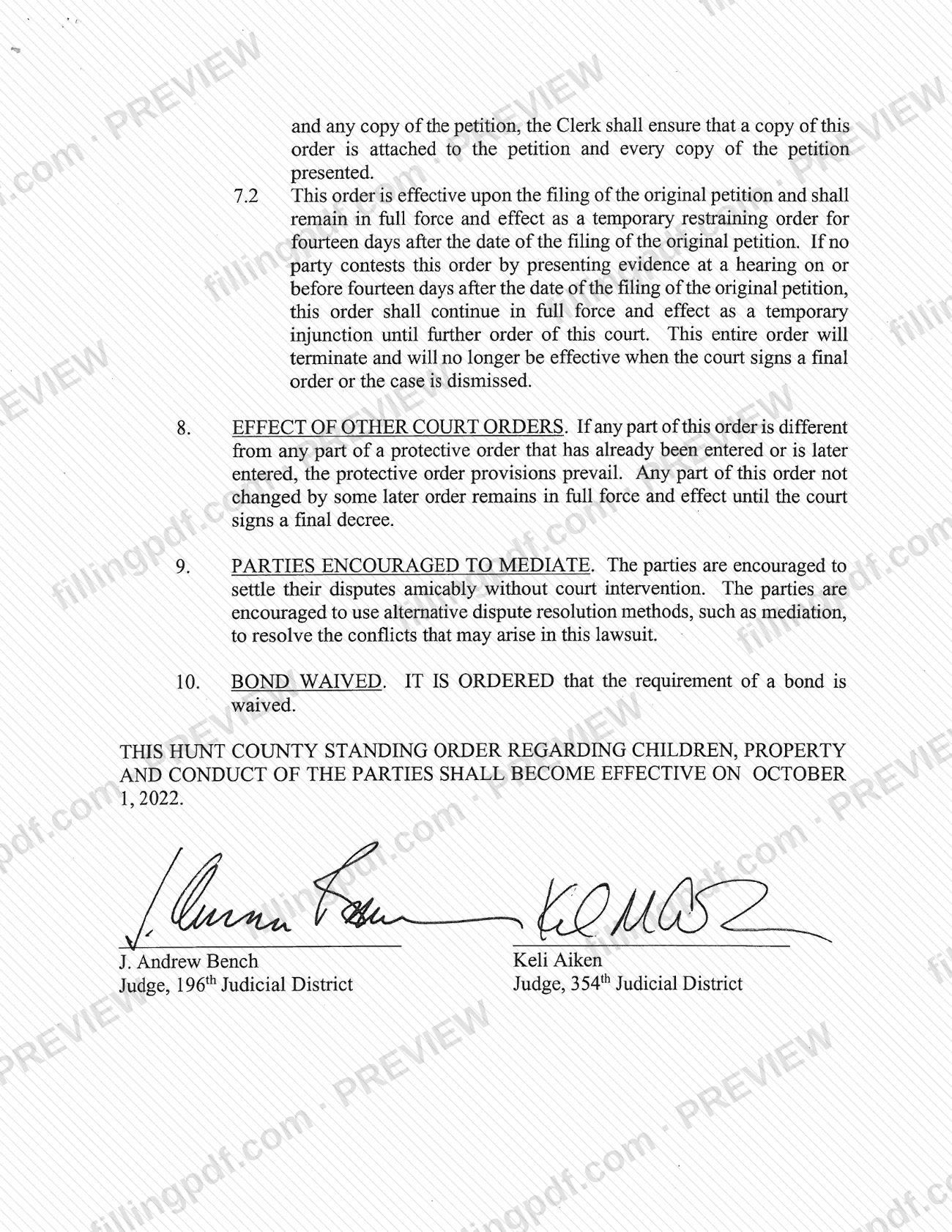
The order takes effect through the filing of a divorce suit or a suit affecting the parent-child relationship in Hunt County, and it governs the parties while the lawsuit is pending before the court. Nothing is filed by the parties to start it, because no party requests it. This version is the one effective 10/1/22. One rule is tied to a date inside the case: item 1.7 looks at who lived in the party's household at the time the divorce was filed. The order prints no other deadline.
How to fill out Hunt County Standing Order Regarding Children, Property and Conduct of the Parties
Confirm the order applies to your case
It covers every divorce suit and suit affecting the parent-child relationship filed in Hunt County, except cases started by the Attorney General of Texas or the Department of Family Protective and Regulatory Services.
Read Section 1 on children
Items 1.1 to 1.8 list what both parties must refrain from, including removing the children from Texas, changing their school, and the overnight-guest rule in item 1.7 for original divorce actions.
Read Section 2 on conduct
Items 2.1 to 2.5 cover language, threats, telephone calls, bodily injury and the other party's mail. They apply to both parties in any covered suit.
Read Section 3 if this is a divorce
Section 3 restricts transfers of property, debt, withdrawals from accounts, changes to account credentials and utility service. Many of its limits say "except as specifically authorized by this order."
Check the property definition
The closing list defines personal and tangible property, from cash and bank accounts to vehicles, retirement accounts and expected income tax refunds. Use it to see what the restrictions cover.
Note the order's own limits
The order states that it does not affect access and possession unless extraordinary relief is requested. Where a rule needs written agreement or a court order, get one before acting.
Review and download the PDF
The text of the order shows no lines for a party to complete. Review the document, then download or print the PDF from FillingPDF and keep a copy for your records.
How to submit Hunt County Standing Order Regarding Children, Property and Conduct of the Parties
The order prints no filing channel, address or portal, because it is not submitted by a party: it is a standing order of the Hunt County District Courts that applies in covered cases without a request. Hunt County publishes the order as a PDF at the official link on this page. If a party needs the court to change something, such as the written agreement or court order that the order requires for removing children from Texas, that request goes to the court handling the case. FillingPDF lets you fill out and download the PDF; any submission follows the channels the court or the Hunt County Clerk gives you.
Common mistakes to avoid
- Assuming the order applies only if a party requests it; the order states it applies in every covered divorce and parent-child suit filed in Hunt County.
- Removing the children from Texas without the written agreement of both parties or an order of the court.
- Withdrawing the children from their school or day-care facility without the written agreement of both parties or a court order.
- Allowing a romantic partner to stay overnight (10:00 p.m. to 7:00 a.m.) while in possession of the child in an original divorce, unless that person lived in the household when the divorce was filed.
- Withdrawing from bank accounts, spending cash or borrowing against a retirement plan during a divorce, except as the order specifically authorizes.
- Changing a username or password on a financial, social media, data storage or other account during a divorce.
- Signing or endorsing the other party's name on a check or tax refund without that party's personal signature.
- Changing the federal income tax withholding on wages or salary while the suit is pending, or cutting utilities at the other party's residence.
Frequently asked questions
What is the Hunt County standing order?
It is an order of the Hunt County District Courts, effective 10/1/22, that applies in every divorce suit and every suit affecting the parent-child relationship filed in Hunt County. It protects children and preserves property while the lawsuit is pending.
Is this a Hunt County property tax form?
No. Despite the word property, this is not a Hunt County property tax form. Its property rules stop spouses from destroying, transferring or hiding assets during a divorce. Property tax questions go to the county offices that handle taxes.
Does the standing order apply to my case?
It applies if your divorce or parent-child suit was filed in Hunt County. It does not apply to cases initiated by the Attorney General of Texas or the Department of Family Protective and Regulatory Services. Section 3 on property applies only to divorce cases.
Do I have to request or sign the standing order?
No. The order says no party requested it; it is a standing order that applies automatically in covered cases. Both parties are ordered to follow it while the lawsuit is pending before the court.
Can I take my child out of Texas during a Hunt County divorce?
Not without the written agreement of both parties or an order of the court. Item 1.1 bars removing the children from Texas, directly or in concert with others, in a covered suit.
Can I withdraw money from our bank account during the divorce?
Not for any purpose, unless the order specifically authorizes it. Section 3 bars withdrawals from checking or savings accounts, spending cash under either party's control, and borrowing from retirement or benefit plans, except as the order authorizes.
Can I fill out the Hunt County standing order online?
You can open the PDF on FillingPDF, fill out any fields online and download or print it. FillingPDF is an independent service and does not file anything with the court or Hunt County; the order itself applies without a filing by the parties.
Ready to fill out Hunt County Standing Order Regarding Children, Property and Conduct of the Parties?
Fill out Hunt County Standing Order Regarding Children, Property and Conduct of the Parties now