
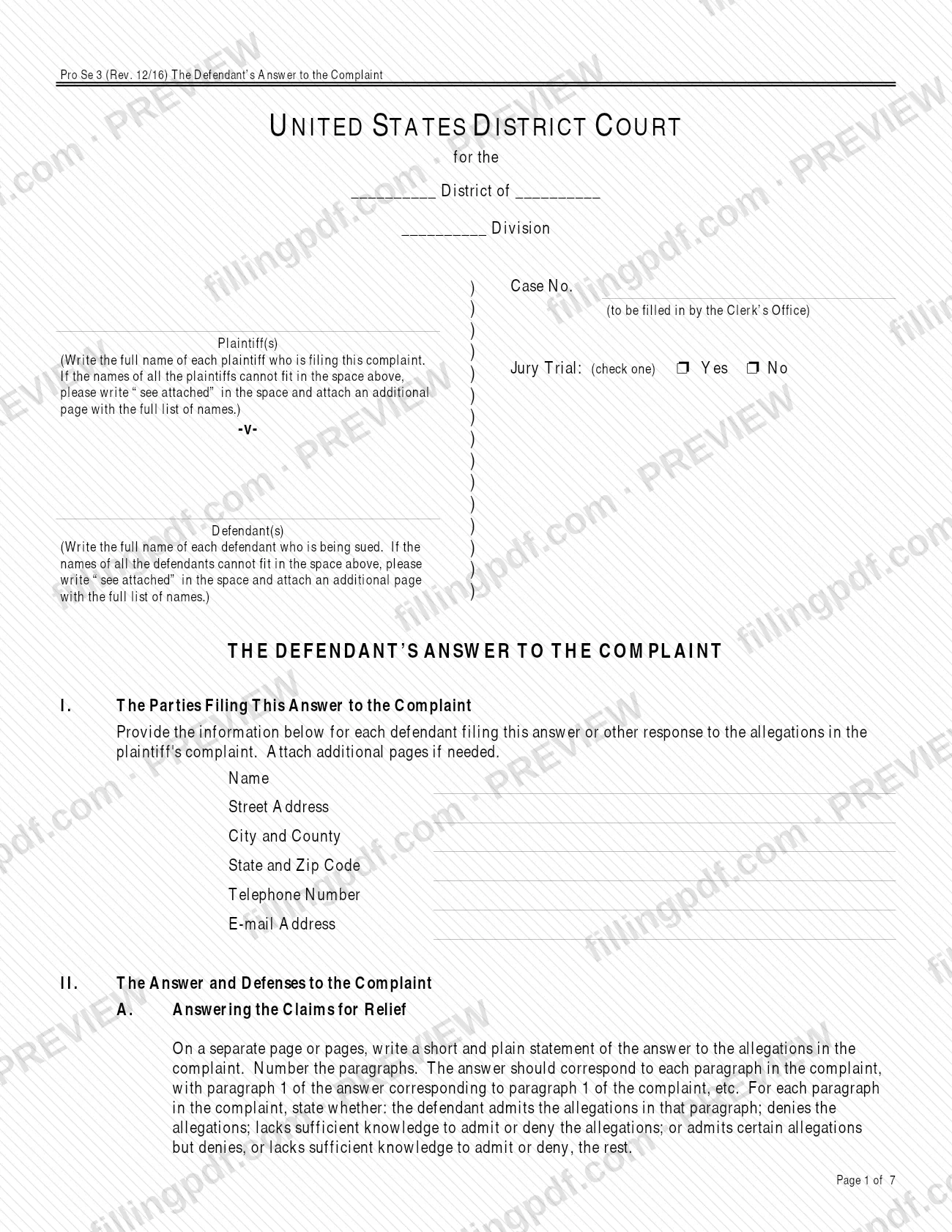
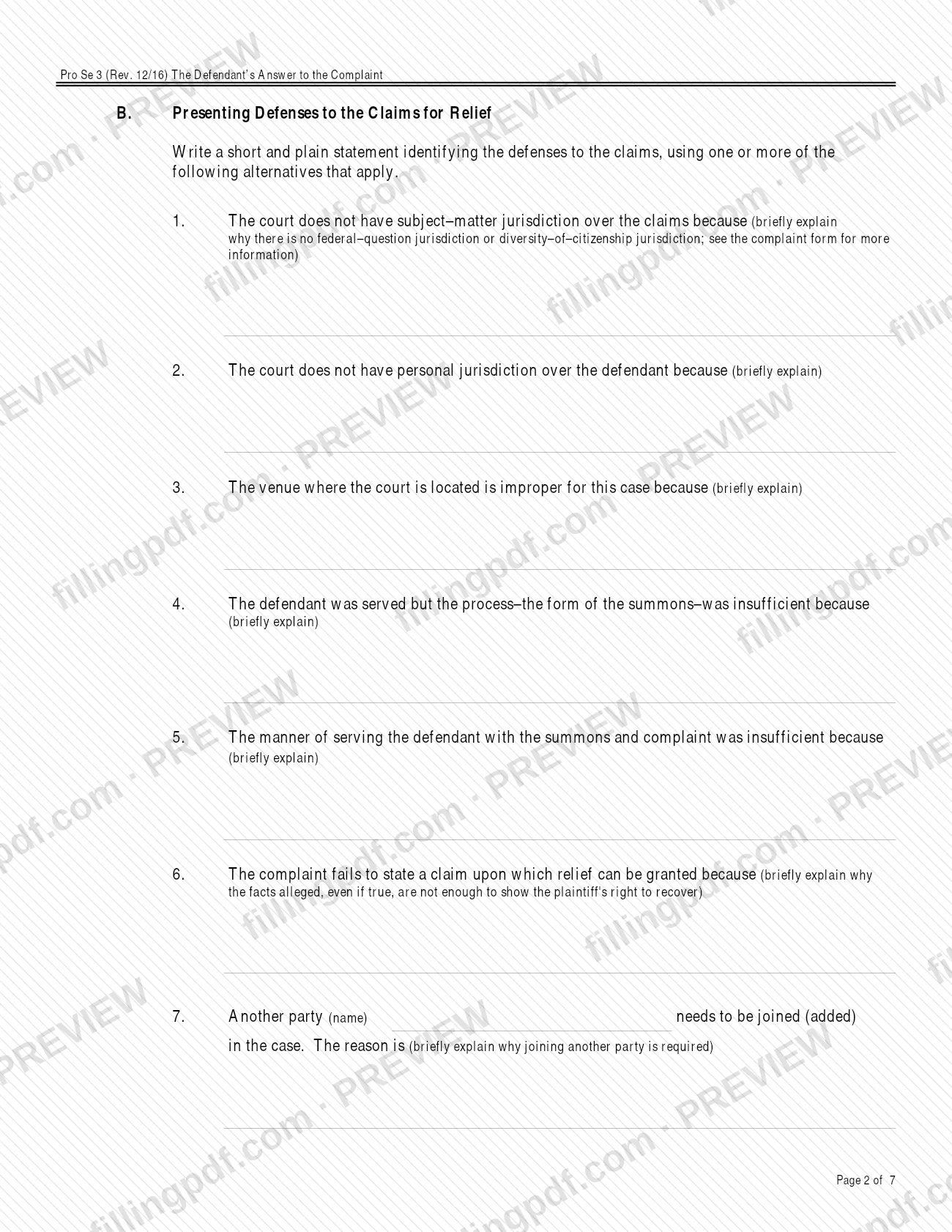
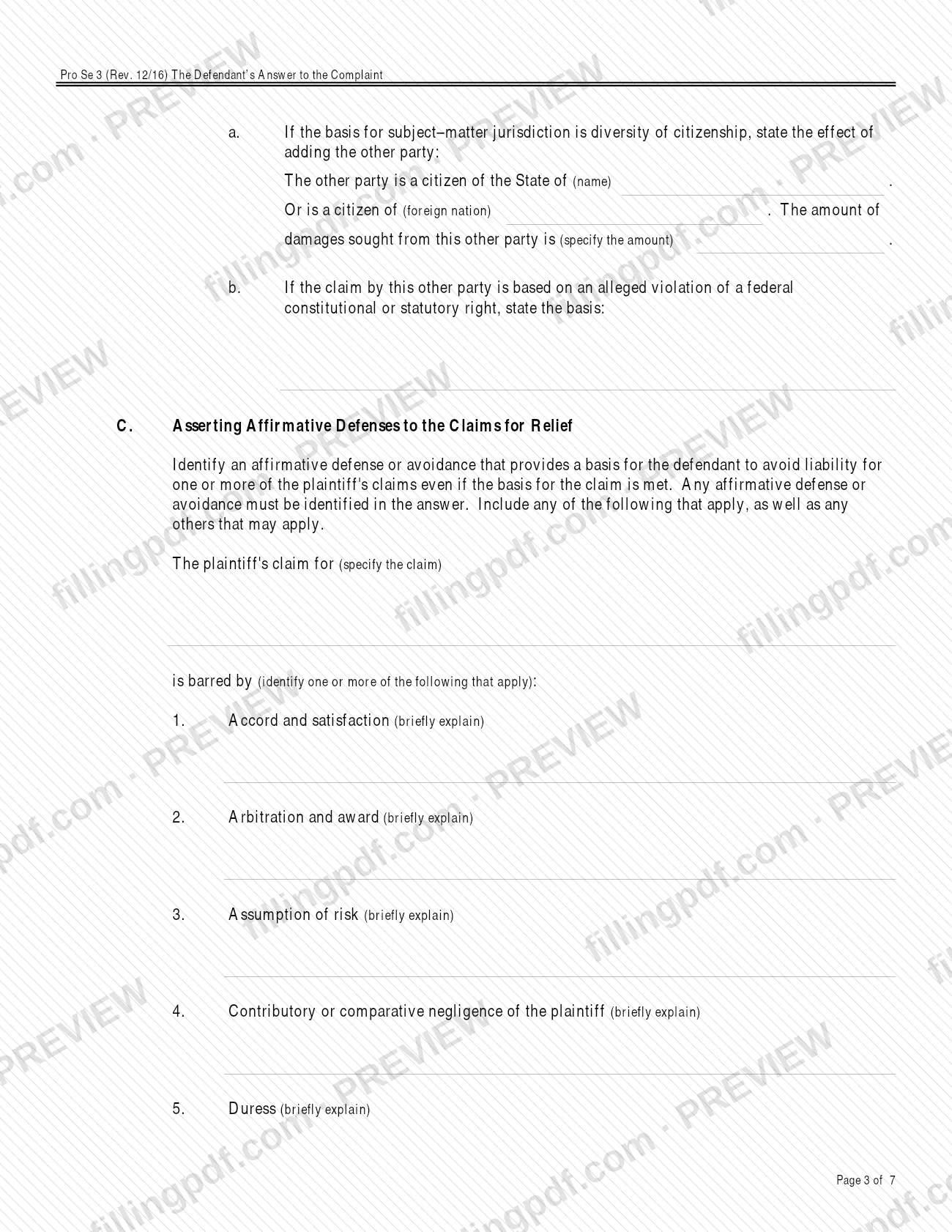
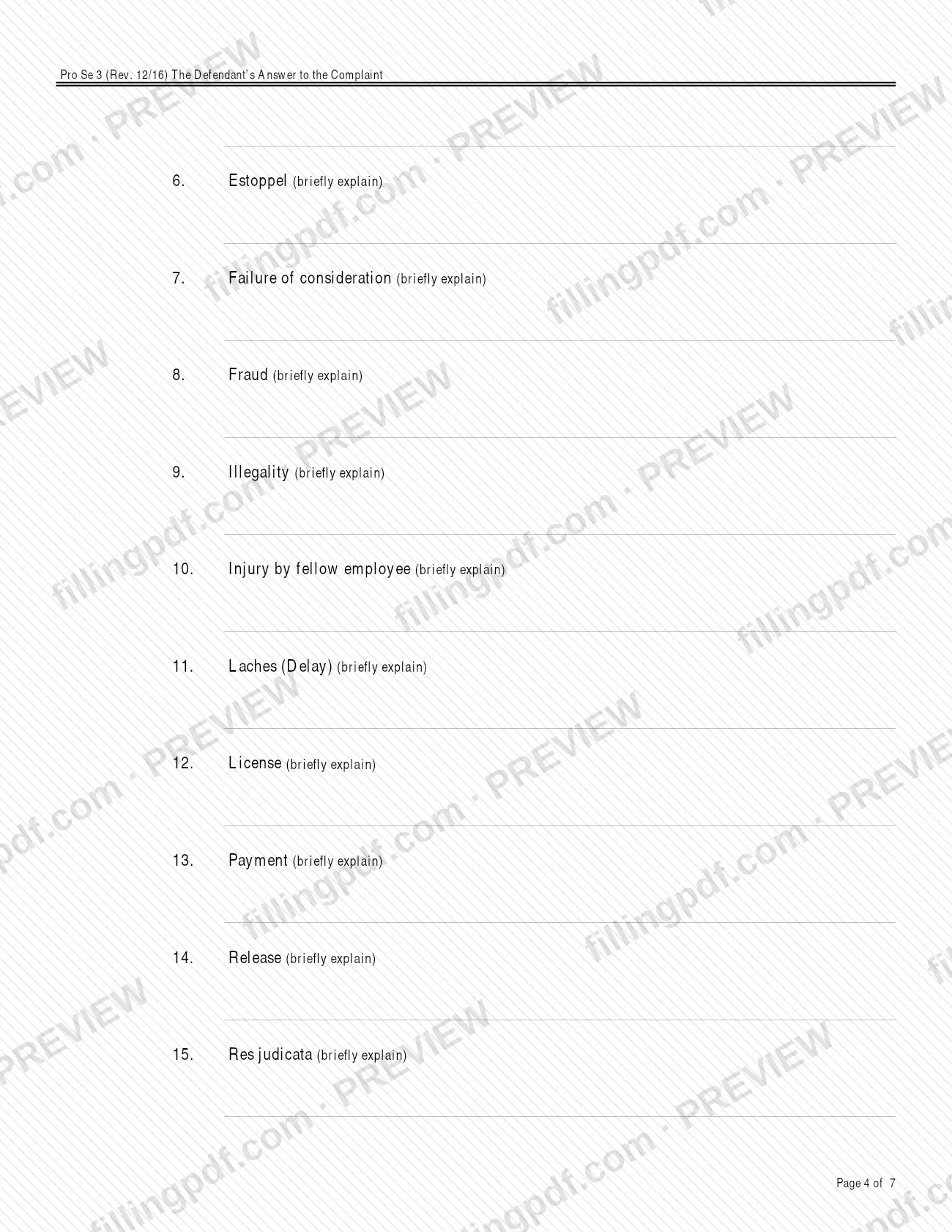
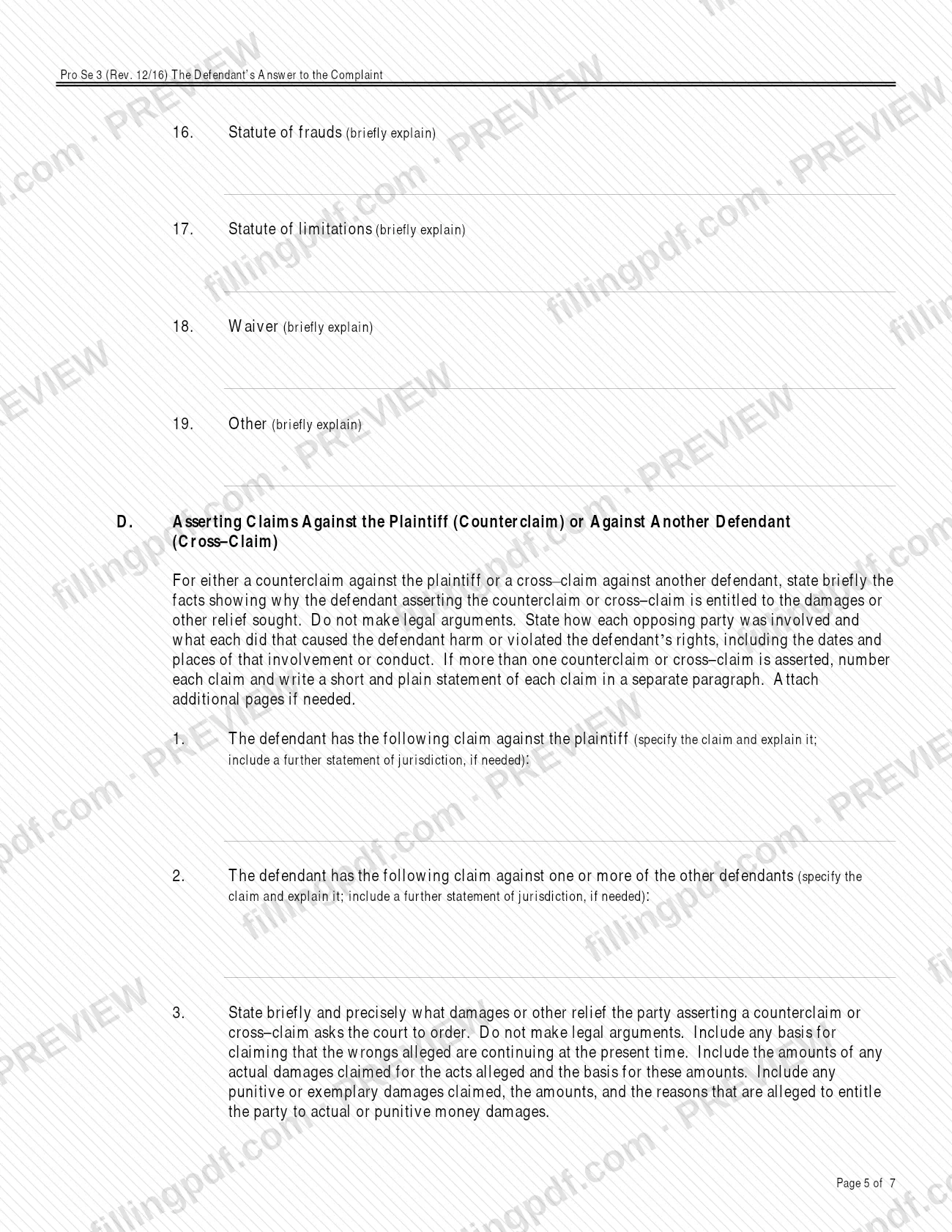
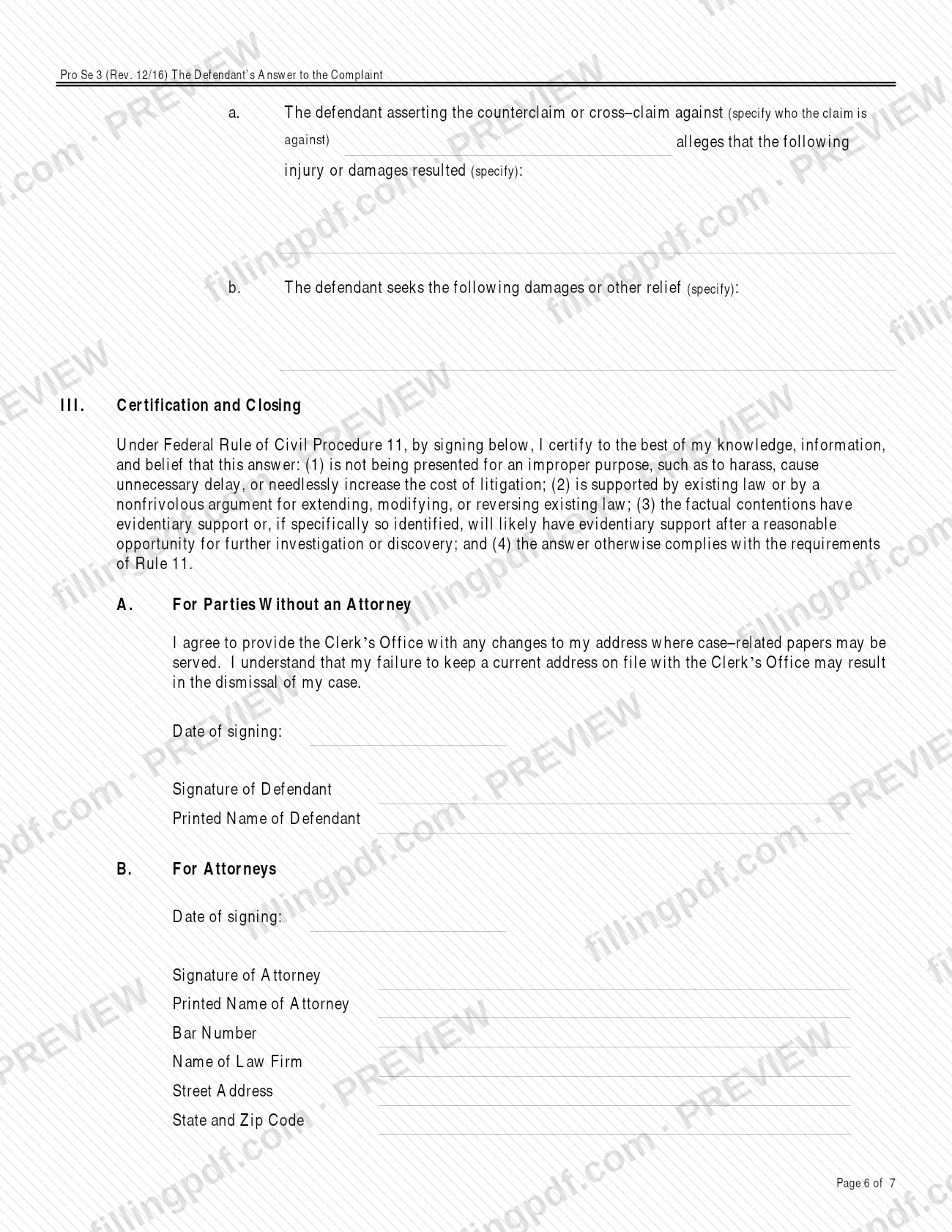
Información sobre Defendant’s Answer to the Complaint (Pro Se 3), de Administrative Office of the U.S. Courts. El PDF oficial es el documento de referencia. El formulario incorpora secciones como «UNITED STATES DISTRICT COURT», «1. The court does not have subject–matter ju», «2. The court does not have personal jurisdic», «3. The venue where the court is located is i», «4. The defendant was served but the process–». Consulta sus instrucciones completas para conocer las condiciones y posibles excepciones. FillingPDF no presenta solicitudes ante la administración.
Última actualización
¿Qué es el Pro Se 3?
Defendant’s Answer to the Complaint es un recurso identificado por Administrative Office of the U.S. Courts. El registro incluye un PDF del organismo. Entre los apartados visibles se encuentran: «UNITED STATES DISTRICT COURT», «1. The court does not have subject–matter ju», «2. The court does not have personal jurisdic», «3. The venue where the court is located is i», «4. The defendant was served but the process–».
¿Quién tiene que presentar el Pro Se 3?
El documento se relaciona con el procedimiento denominado Defendant’s Answer to the Complaint. La fuente describe expresamente esta condición o destinatario: «They are limited to types of cases often filed in federal courts by those who represent themselves or who may not have much experience in federal courts.». Consulta el texto original para comprobar a quién se aplica.
Cuándo presentar el Pro Se 3
La documentación disponible para este recurso no indica un plazo general de presentación que pueda afirmarse para todos los supuestos.
Cómo rellenar el Pro Se 3
Localiza el recurso correcto
Comprueba el nombre oficial del documento, Defendant’s Answer to the Complaint, y su referencia Pro Se 3. Consulta su versión e instrucciones antes de utilizarlo.
Revisa: UNITED STATES DISTRICT COURT
El documento oficial identifica el apartado «UNITED STATES DISTRICT COURT». Comprueba los datos y las instrucciones impresas junto a este apartado; no presupongas que se aplica a todos los usuarios.
Revisa: 1. The court does not have subject–matter ju
El documento oficial identifica el apartado «1. The court does not have subject–matter jurisdiction over the claims because (briefly ex». Comprueba los datos y las instrucciones impresas junto a este apartado; no presupongas que se aplica a todos los usuarios.
Revisa: 2. The court does not have personal jurisdic
El documento oficial identifica el apartado «2. The court does not have personal jurisdiction over the defendant because (briefly expla». Comprueba los datos y las instrucciones impresas junto a este apartado; no presupongas que se aplica a todos los usuarios.
Revisa: 3. The venue where the court is located is i
El documento oficial identifica el apartado «3. The venue where the court is located is improper for this case because (briefly explain». Comprueba los datos y las instrucciones impresas junto a este apartado; no presupongas que se aplica a todos los usuarios.
Revisa: 4. The defendant was served but the process–
El documento oficial identifica el apartado «4. The defendant was served but the process–the form of the summons–was insufficient becau». Comprueba los datos y las instrucciones impresas junto a este apartado; no presupongas que se aplica a todos los usuarios.
Consulta la instrucción específica 1
El documento contiene esta indicación literal: «(Write the full name of each plaintiff who is filing this complaint. )». Aplica únicamente la opción o condición correspondiente a tu caso.
Consulta la instrucción específica 2
El documento contiene esta indicación literal: «If the names of all the plaintiffs cannot fit in the space above, ) Jury Trial: (check one) ’ Yes ’ No». Aplica únicamente la opción o condición correspondiente a tu caso.
Consulta la instrucción específica 3
El documento contiene esta indicación literal: «please write “see attached” in the space and attach an additional )». Aplica únicamente la opción o condición correspondiente a tu caso.
Revisa el documento antes de utilizarlo
Repasa los datos indicados y consulta las instrucciones de la agencia antes de imprimirlo, descargarlo o presentarlo mediante el cauce oficial que corresponda.
Cómo presentar el Pro Se 3
El contenido oficial extraído no identifica un procedimiento de presentación único para este documento. La edición del PDF y su envío ante la agencia son operaciones distintas.
Errores comunes que debes evitar
- Advertencia de la fuente oficial, literal: «I understand that my failure to keep a current address on file with the Clerk’s Office may result».
- Advertencia de la fuente oficial, literal: «The forms do not try to cover every type of case.».
- Advertencia de la fuente oficial, literal: «The forms do not try to address or cover all the different types of claims or defenses, or how specific facts might affect a particular claim or defense.».
- Advertencia de la fuente oficial, literal: «The forms do not give any guidance on when certain kinds of pleadings or claims or defenses have to be raised, or who has to be sued.».
Preguntas frecuentes
¿Qué es Pro Se 3?
Defendant’s Answer to the Complaint es un recurso identificado en la documentación de Administrative Office of the U.S. Courts. El recurso original está disponible como documento PDF. Contiene apartados como «UNITED STATES DISTRICT COURT», «1. The court does not have subject–matter jurisdiction over the claims because (briefly explain», «2. The court does not have personal jurisdiction over the defendant because (briefly explain)», «3. The venue where the court is located is improper for this case because (briefly explain)», «4. The defendant was served but the process–the form of the summons–was insufficient because».
¿Qué apartados aparecen en Pro Se 3?
Se han identificado apartados como «UNITED STATES DISTRICT COURT», «1. The court does not have subject–matter ju», «2. The court does not have personal jurisdic», «3. The venue where the court is located is i», «4. The defendant was served but the process–». Lee sus instrucciones específicas en el original.
¿Dónde se puede consultar Pro Se 3?
La fuente de acceso identificada en el registro es https://www.uscourts.gov/sites/default/files/the_defendants_answer_to_the_complaint.pdf.
¿Existen instrucciones de uso para Pro Se 3?
El registro incorpora instrucciones o contenido oficial. Revisa los apartados del documento y las indicaciones recogidas en esta ficha.
¿Cuál es el plazo de presentación de Pro Se 3?
La documentación disponible para este recurso no indica un plazo general de presentación que pueda afirmarse para todos los supuestos.
¿Cómo se presenta o utiliza Pro Se 3?
El contenido oficial extraído no identifica un procedimiento de presentación único para este documento. La edición del PDF y su envío ante la agencia son operaciones distintas.
¿Qué advertencias oficiales aparecen?
Advertencia de la fuente oficial, literal: «I understand that my failure to keep a current address on file with the Clerk’s Office may result». Advertencia de la fuente oficial, literal: «The forms do not try to cover every type of case.».
¿Listo para rellenar el Pro Se 3?
Rellenar el Pro Se 3 ahora